
Fire Suppression System Contractor for Commercial Kitchens in Saudi Arabia
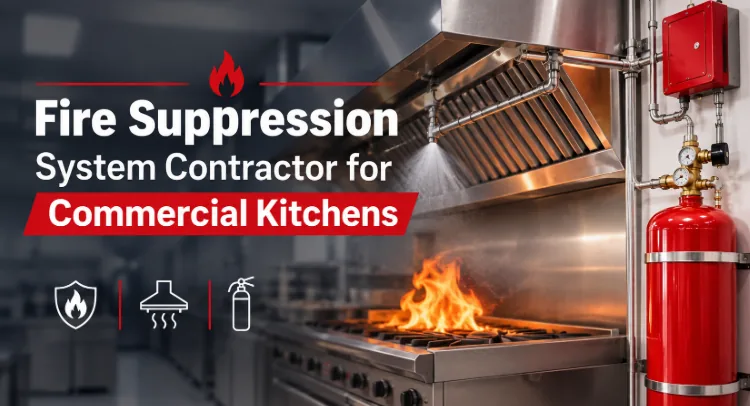
Kites Advanced Fire & Safety Company is a fire suppression contractor based in Ad Dammam, working on commercial kitchen fire suppression systems across Kingdom of Saudi Arabia. Every fire suppression system in Saudi Arabia protecting a commercial kitchen has to meet Saudi Civil Defense and Saudi Building Code requirements, and Kitessafety carries a project through the full lifecycle: site assessment, system design, equipment supply, installation, testing, commissioning, inspection and ongoing maintenance, under one contract rather than handed between separate vendors.
Scope of work
What Does a Fire Suppression System Contractor Do?
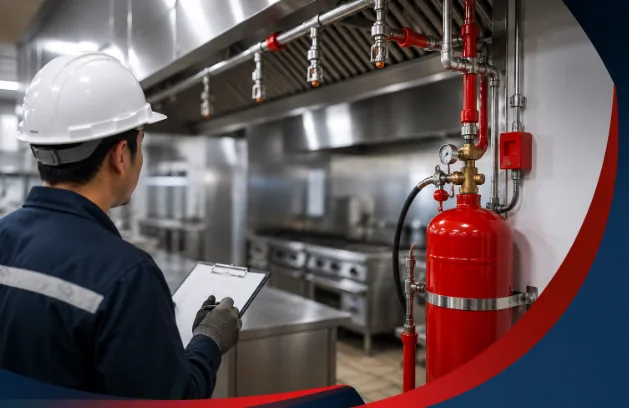
A fire suppression contractor is responsible for more than fitting a cylinder under a hood. On a commercial kitchen project, the work typically breaks down into six stages.
The last stage is where many kitchen fire suppression installations fall short. A system that is well designed and installed still needs inspection and preventive maintenance on a fixed schedule, and if it ever discharges, it needs full restoration rather than a quick refill. Kitessafety covers all six stages directly rather than sub-contracting the after-sales portion out.
| Stage | What it involves |
|---|---|
| Site Survey & Hazard Assessment | Surveying the kitchen layout, identifying cooking equipment and exhaust hazards, and assessing risk before any design work starts. |
| System Design & Engineering | Sizing the suppression system and selecting equipment to match the specific hazards identified on site. |
| Equipment Supply | Sourcing the suppression system, detection components, nozzle assemblies, distribution piping and manual pull stations. |
| Installation | Fitting the system into the kitchen exhaust hood, ducting and cooking line without disrupting the layout. |
| Testing & Commissioning | Functional testing, system verification, an operational demonstration and client training before hand-over. |
| After-Sales Support | Inspection, preventive maintenance, refilling and recharge, repairs, AMC cover, and emergency restoration after a discharge. |
Systems
Fire Suppression Systems We Work With
Kitessafety works specifically with wet chemical fire suppression systems designed for commercial cooking operations. Rather than a general fire protection catalogue, the systems are engineered around four hazard groups found in a professional kitchen.
| Hazard group | Typical equipment covered |
|---|---|
| Cooking Equipment | Deep Fat Fryers, Griddles, Cooking Ranges, Woks, Ovens, Salamanders |
| Open-Flame Appliances | Charbroilers, Lava Rock Grills, Rotisserie Equipment, BBQ Stations |
| Exhaust Protection Areas | Kitchen Exhaust Hoods, Exhaust Ducts, Plenums, Filters |
| Auxiliary Protection Systems | Gas Shut-Off Systems, Electrical Shutdown Systems, Alarm Interface Systems |
A wet chemical system detects heat above the cooking line, discharges an extinguishing agent onto the hazard, and simultaneously cuts the gas or electrical supply to the equipment — addressing the appliance, the hood and the duct as one connected hazard rather than treating each in isolation. See the full equipment list Kitessafety designs around for specific appliance types.
How Do You Choose the Right Fire Suppression System?
For a commercial kitchen, the right system is determined less by brand and more by three factors: the specific cooking appliances on the line, how the exhaust hood and duct are configured, and what the applicable fire code requires for that occupancy type. A single-fryer takeaway counter and a full-service hotel kitchen with charbroilers and multiple exhaust runs need very different nozzle counts and cylinder capacity, even though both fall under the same wet chemical system category. A proper site survey, not a standard package, is what determines system sizing, and any system installed should carry documentation that supports Civil Defense approval for the specific site.
How we work
Our Fire Suppression System Contracting Process
A typical project with Kitessafety runs through eight stages, from the first site visit to the system's first scheduled inspection.
Site assessment and hazard evaluation
The kitchen is surveyed as built, with every appliance under the hood recorded along with the exhaust and fuel arrangement.
System design and equipment selection
Agent volume, nozzle count and component selection are calculated against the hazards actually found on site.
Equipment supply
The suppression system, detection components, nozzle assemblies, distribution piping and manual pull stations are supplied as one matched set.
Installation into the kitchen hood, duct and cooking line
Fitted to match the approved design, sequenced around the kitchen's operating or fit-out schedule.
Functional testing and system verification
The detection line, release mechanism and shut-off interfaces are tested as a sequence, not as separate parts.
Commissioning, including client training and documentation
Kitchen staff are shown what the system does and how it behaves on activation, and the commissioning record is handed over.
First compliance inspection
The correct inspection cycle for the site is confirmed and the first inspection is scheduled.
Ongoing maintenance, refilling and emergency support
Preventive maintenance, refilling, AMC cover and 24x7 emergency response continue across the system's working life.
Fire Suppression Services in Detail
Fire Suppression System Design and Engineering
Design starts on site, not at a desk. Kitessafety carries out a site survey, risk assessment and hazard evaluation before any system is specified, then designs the system and selects equipment to match what was actually found — cooking appliance types, exhaust hood configuration, duct runs, and any auxiliary shutdown requirements. For the full breakdown of what the design phase covers, see Design & Engineering.
Fire Suppression System Installation
Installation covers the fire suppression system itself along with detection components, nozzle assemblies, distribution networks and manual pull stations, fitted to match the design produced during the engineering phase. Because kitchens are usually operating on tight timelines around opening dates or renovation windows, installation is sequenced to minimise disruption to the rest of the fit-out. More detail is available on the Supply & Installation service page.
Request an Installation Proposal
Fire Suppression System Testing and Commissioning
Before a system is handed over, Kitessafety runs functional testing and system verification to confirm the detection line, nozzles and shut-off mechanisms activate correctly, followed by an operational demonstration and client training so kitchen staff understand what the system does and how to reset it after a routine test. Full documentation is provided at commissioning, which is also what supports the site's Civil Defense compliance record. See Testing & Commissioning for the complete process.
Fire Suppression System Inspection and Compliance Support
Routine inspections check system condition, confirm functional verification and support the compliance review a site needs to keep operating legally. The Saudi Building Code sets requirements specifically for commercial cooking equipment and systems, and inspection intervals are set by the applicable fire code, the system manufacturer and the local fire authority rather than a fixed calendar date. Kitessafety confirms the correct inspection cycle for each site at the first visit. More on Inspection Services is available on the services page.
Fire Suppression System Maintenance
Preventive maintenance and an Annual Maintenance Contract cover different scopes, and kitchens sometimes conflate the two.
| Preventive Maintenance Visit | Annual Maintenance Contract (AMC) | |
|---|---|---|
| Scope | Scheduled maintenance visit: detection line inspection, nozzle inspection, mechanical testing, performance verification | Scheduled preventive maintenance plus priority technical support and emergency assistance across the year |
| Billing | Typically arranged per visit or per inspection cycle | Covered under a single annual contract |
| Best suited for | Sites wanting inspections scheduled as needed | Sites wanting priority response and predictable annual cover |
Both routes keep a system in working order; the difference is mainly how support is structured and prioritised across the year. Details on both are on the Preventive Maintenance and Annual Maintenance Contracts service pages.
Fire Suppression System Refilling and Recharge
After a system discharges — whether from an actual fire or an accidental trip — it needs more than a top-up. Kitessafety handles wet chemical refilling, cylinder recharging, full system restoration after discharge, and replacement of any expired components, then functionally verifies the system before signing it back off as protected. A kitchen should not resume normal cooking operations on a system that has discharged until this restoration is complete. See Refilling & Recharge for the full process.
Fire Suppression Contractor for Commercial & Industrial Facilities
Whatever type of building a kitchen sits inside, the suppression requirement is set by the kitchen itself, not the building category. Kitessafety has worked on commercial kitchen fire suppression across a wide range of facility types:
- Healthcare — hospitals, medical facilities
- Hospitality — hotels, resorts, serviced apartments
- Food & Beverage — restaurants, cafes, fast food chains, cloud kitchens
- Commercial Facilities — airports, shopping centres, government buildings
- Industrial Facilities — industrial kitchens, catering facilities
A hospital kitchen and a shopping-centre food court both need the same underlying protection — correctly sized wet chemical suppression over the cooking line — even though the surrounding building and its other fire systems look nothing alike. See the industries Kitessafety has worked across for more detail.
Fire Suppression System Upgrades and Replacement
Kitchen fire suppression systems age, and code requirements are updated over time. A system installed years ago by a different contractor may no longer match the kitchen's current equipment layout, may be running expired components, or may simply no longer meet the current Saudi Building Code requirements for the site. Kitessafety assesses existing systems, replaces expired or non-compliant components, and where a system is due for a full replacement rather than a repair, designs and installs a current, code-compliant system in its place.
Why Kitessafety
Why Choose Kitessafety as Your Fire Suppression Contractor?
- Specialised expertise — focused exclusively on fire suppression and fire safety for commercial kitchens, not a general fire-protection sideline
- 10+ years of experience serving commercial kitchens across the Kingdom
- An experienced technical team trained specifically on commercial kitchen fire suppression systems
- Fast response for inspections, maintenance and emergency support
- Quality, industry-recognised fire suppression equipment
- Kingdom-wide coverage from an Ad Dammam base, including Khobar, Dhahran, Jubail, Riyadh, Jeddah
- 24x7 emergency service support for post-discharge restoration
Kitessafety has worked with contracting and industrial groups including Rawabi, Hexagon Contracting, Al-Essa For Contracting, Abdul Mohsen Al Tamimi Group, alfanar, Al Rushaid Construction and others across the Kingdom. See the full client list and more on why clients choose Kitessafety.
Why Should You Hire a Professional Fire Suppression System Contractor?
A commercial kitchen without an approved, functioning suppression system is operating outside Saudi Civil Defense requirements, which can mean fines, a forced closure order, or an invalidated insurance claim after an incident. Fire suppression companies vary widely in scope — some install and walk away, leaving inspection and maintenance to whoever the kitchen finds next, which is exactly where compliance gaps tend to open up. A contractor who designs, installs and then continues to maintain the same system has a direct stake in it working correctly the day it matters, rather than treating installation as a one-time transaction.
How to Choose a Fire Suppression System Contractor
Not every fire protection contractor working in Saudi Arabia specialises in commercial kitchens specifically, and that distinction matters more than it might seem. A few things worth checking before signing a contract:
- Do they specialise in commercial kitchen suppression, or is it one line item among many unrelated services?
- Can they show experience with a kitchen of similar size and equipment to yours?
- Do they handle the full lifecycle — design through long-term maintenance — or only installation?
- What is their response time for inspections and emergency call-outs?
- Do they offer both preventive maintenance and AMC options?
- Can they name existing clients or projects for reference?
Need a Fire Suppression System Contractor for Your Project?
Whether a kitchen is still on the drawing board or already operating with a system that's overdue for inspection, Kitessafety can take on the project as a single point of contact — from site survey through to long-term maintenance.
Talk to a kitchen fire suppression specialist in Ad Dammam.
- +966 592 066 358
- enquiry@kitessafety.com
- 4986 King Khalid – Ar Rabi, Unit No.6, Ad Dammam 32241-8167, Kingdom of Saudi Arabia
Request a quote
Fastest response: message us on WhatsApp or email enquiry@kitessafety.com.
Frequently Asked Questions
Does Kitessafety handle the full project, or only installation?
Kitessafety handles the full project lifecycle — site survey, design, equipment supply, installation, testing, commissioning, inspection and ongoing maintenance — rather than only installation. The same contractor stays involved through the system's working life.
Can Kitessafety support Saudi Civil Defense compliance requirements?
Yes. Kitessafety designs, installs and documents systems to support Civil Defense approval for the specific site, and testing and commissioning includes the documentation that compliance reviews typically require.
How long does a commercial kitchen fire suppression installation take?
Installation timelines depend on kitchen size, the number of appliances and hoods being covered, and whether the kitchen is a new build or an existing operation being retrofitted. A site survey is the first step in giving an accurate project timeline.
What is the difference between preventive maintenance and an AMC?
A preventive maintenance visit is a scheduled inspection and mechanical test of the system. An Annual Maintenance Contract covers scheduled preventive maintenance plus priority technical support and emergency assistance across the full year under one contract.
Can Kitessafety take over maintenance of a system installed by another contractor?
Yes. Kitessafety can assess an existing system installed by a different contractor, bring it up to current inspection and compliance standards, and take over ongoing preventive maintenance or AMC cover from that point forward.
Does Kitessafety provide emergency support outside normal business hours?
Yes. Kitessafety offers 24x7 emergency service support, including post-discharge system restoration and urgent fault diagnosis, with priority support for clients on an Annual Maintenance Contract.
Serving Dammam, Khobar, Dhahran, Jubail, Riyadh, Jeddah and commercial kitchens Kingdom-wide from our base in Ad Dammam.