
- Fire Suppression Systems
- Detection Components
- Nozzle Assemblies
- Distribution Networks
Testing & Commissioning
Fire Suppression Solutions
A suppression system is not complete until it has been proven to operate. We carry out functional testing and system verification, demonstrate operation to your team, train the staff who will use it, and hand over the documentation your facility and insurers need.
What Testing & Commissioning includes
Scope of work
- Functional Testing
- System Verification
- Operational Demonstration
- Client Training
- Documentation
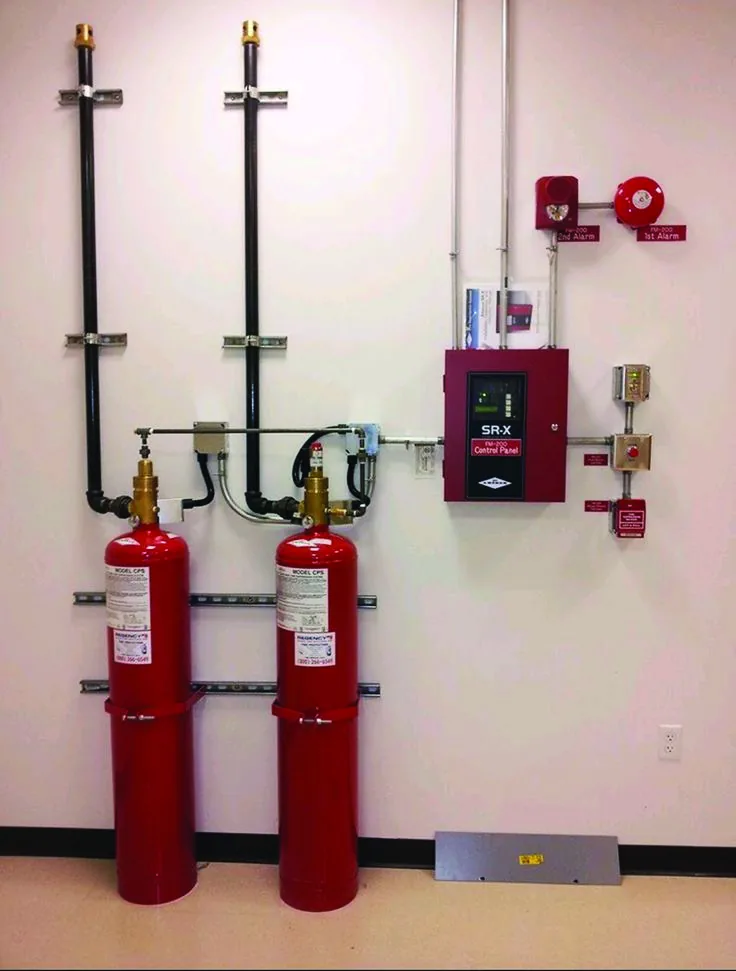
How we work
Our Testing & Commissioning process
-
Functional test
The detection line, release mechanism, gas shut-off and any electrical shutdown interface are tested as a sequence, not as separate parts.
-
Verify against the design
Nozzle positions, aim, appliance coverage and agent volume are checked against the approved design. Anything that drifted during installation is corrected here.
-
Demonstrate operation
We show your team exactly what happens on activation — what shuts down, what discharges, and what they must do next.
-
Train the staff
Kitchen staff are trained on the manual pull station, on the correct response after a discharge, and on what must never be done to the system during a shift.
-
Issue documentation
You receive the commissioning record, system drawing and component schedule. This is the paperwork your facility, insurer or fire authority will ask for later.
Who this is for
We deliver testing & commissioning for commercial kitchens across Kingdom of Saudi Arabia — from single restaurant kitchens to hotel, hospital, airport and industrial catering facilities.
Not sure which appliances in your kitchen need protection? See Equipment We Protect for the cooking equipment, open-flame appliances, exhaust areas and auxiliary systems a suppression system has to cover.
Serving Dammam, Khobar, Dhahran, Jubail, Riyadh, Jeddah and commercial kitchens Kingdom-wide from our base in Ad Dammam.
Frequently asked questions
What does commissioning actually prove?
That the installed system releases when it should, that the gas and power shut down with it, and that agent reaches every protected appliance. An uncommissioned system is an assumption, not a protection.
Do you train our kitchen staff?
Yes. Operational demonstration and client training are part of the commissioning scope, because the manual pull station is only useful if the people on shift know where it is and when to use it.
What documentation do we receive?
A commissioning record, the system drawing and a component schedule. Keep these — they are the reference point for every future inspection and refill.
Related
Other services
- Routine Inspections
- Compliance Reviews
- System Condition Assessment
- Functional Verification
Annual Maintenance Contracts (AMC)
- Scheduled Preventive Maintenance
- Priority Technical Support
- Emergency Service Assistance
- Maintenance Reporting