
Kitchen Fire Suppression Systems for Commercial Kitchens
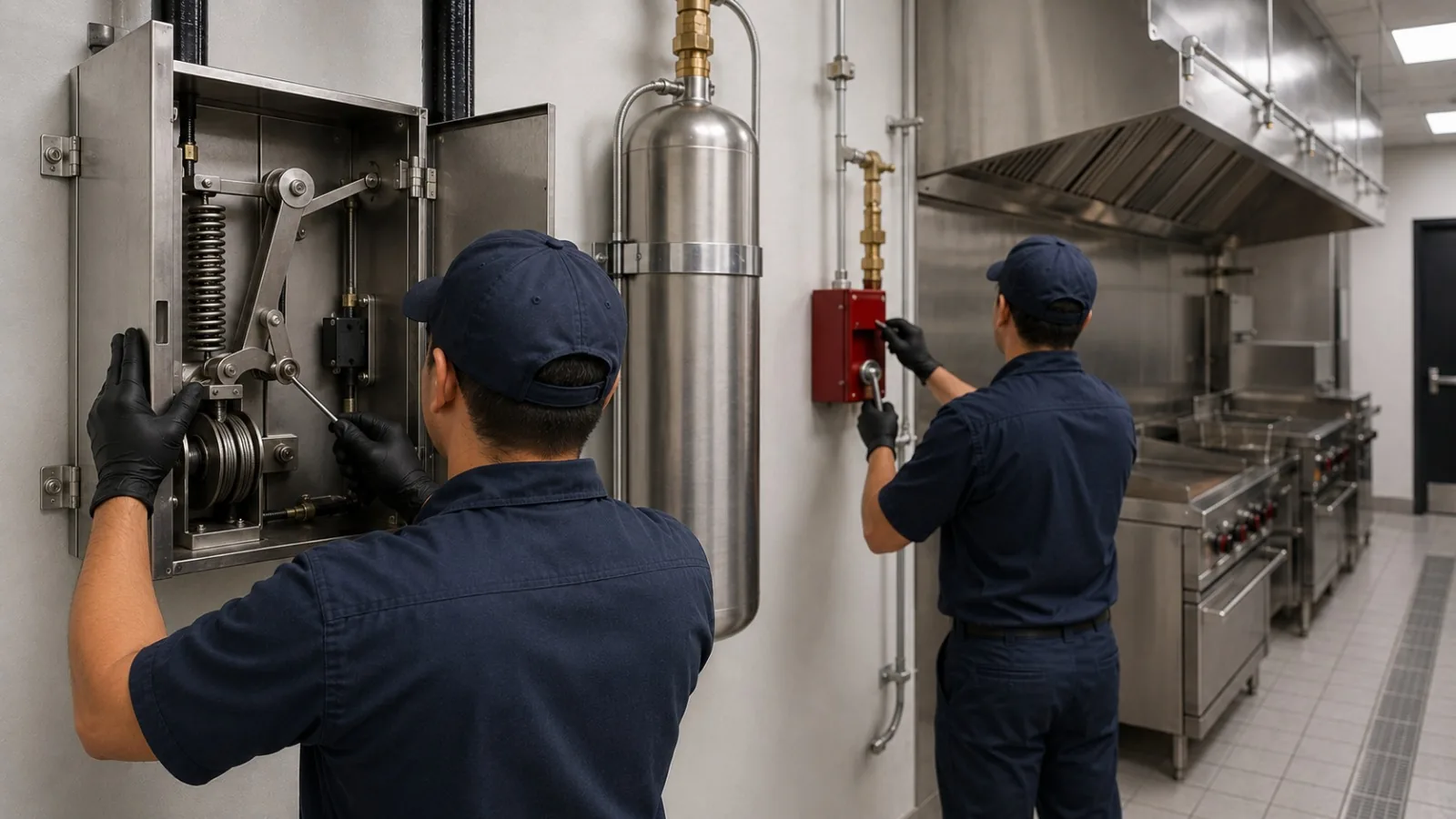
Kitessafety designs and installs engineered kitchen fire suppression systems for commercial cooking environments across Saudi Arabia, covering the cooking equipment, the exhaust hood above it, and the duct that carries grease-laden air away. A commercial kitchen fire suppression system, sometimes called a kitchen fire protection system, is built around rapid detection, reliable discharge and consistent servicing, not any single component, and no system removes the need for safe cooking practices and a trained kitchen team alongside it.
Request a Kitchen Fire Suppression Quote
Talk to Kites Advanced Fire & Safety Company in Ad Dammam: call +966 592 066 358 or email enquiry@kitessafety.com.
What Is Kitchen Fire Suppression?
Kitchen fire suppression is a fixed, automatic system installed above and around commercial cooking equipment that detects heat from a fire and discharges an extinguishing agent directly onto the hazard, while simultaneously cutting fuel or power to the equipment that caused it. Unlike a portable fire extinguisher, which needs a person to notice the fire, reach it and operate it correctly under pressure, a kitchen fire suppression system activates on its own the moment heat crosses a set threshold, before a small flare-up has time to spread to the hood and duct above it.
Why Commercial Kitchens Need Fire Suppression
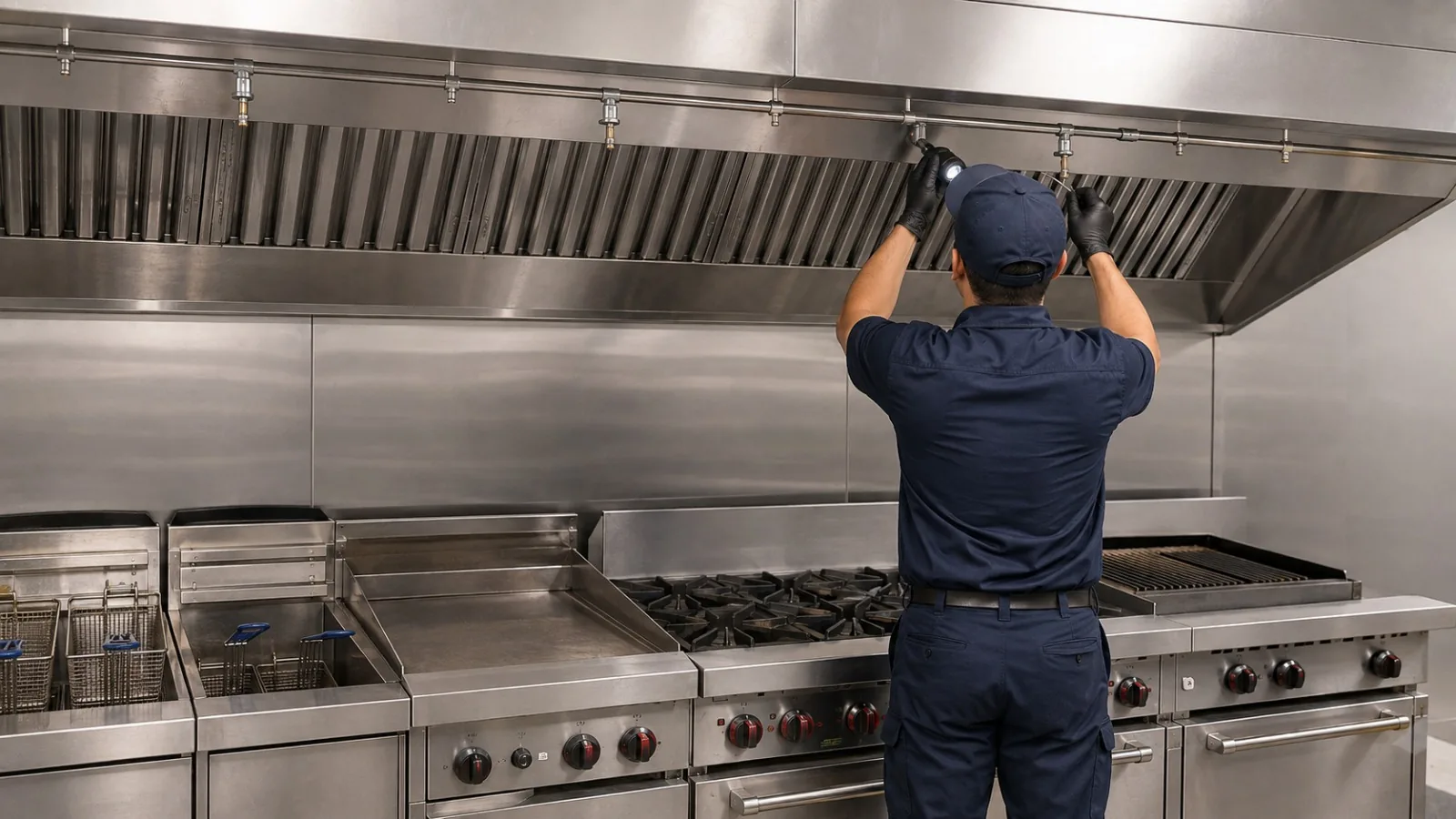
Commercial kitchen fire suppression exists because a commercial cooking line runs hotter and longer than a domestic kitchen ever does. Deep fryers hold oil above 300°C, open flames sit inches from grease-coated surfaces, and the exhaust hood above the line pulls hot, grease-laden air through ducting that can itself catch fire if it isn't cleaned and protected. A grease fire that starts at a fryer can travel up into the hood and duct within seconds, which is exactly why suppression coverage has to include the appliance, the hood and the duct as one connected system rather than protecting the fryer alone. In Saudi Arabia, commercial kitchens are required to have an approved suppression system in place as a condition of operating, reviewed under Saudi Civil Defense and Saudi Building Code requirements, on top of whatever an insurer separately expects to see before covering the site.
How Does a Kitchen Fire Suppression System Work?
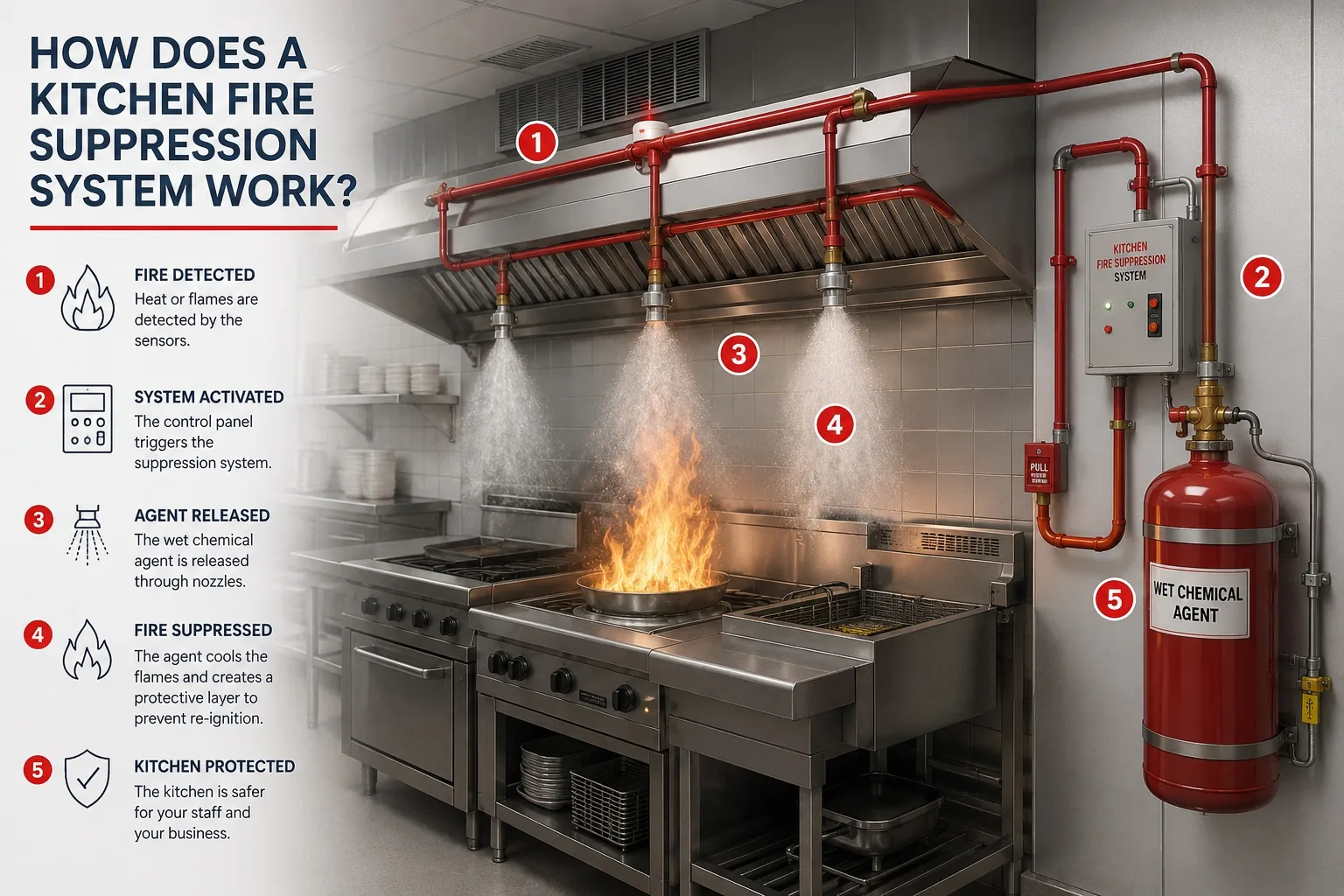
Modern kitchen fire suppression systems use a wet chemical agent rather than the dry chemical powders used decades ago, because today's vegetable-oil cooking runs hotter and re-ignites more easily than older animal-fat frying did. The sequence, from ignition to a safe kitchen, generally runs like this:
- Heat from a fire rises into the detection line above the cooking equipment
- Once heat crosses the system's rated threshold, the system triggers automatically
- A wet chemical agent discharges through nozzles positioned over the appliance, hood and duct
- The agent reacts with the hot cooking oil in a process called saponification, forming a soap-like layer that smothers the flame and cools the surface
- Gas or electrical supply to the cooking equipment is cut automatically at the same time
- A signal is sent to the alarm and monitoring system so staff and, where connected, a monitoring service are notified
The cooling effect is what separates a wet chemical system from older technology: smothering a grease fire without cooling it below its auto-ignition temperature just invites the fire to restart once the extinguishing agent disperses.
Areas Protected by Kitchen Fire Suppression
A correctly designed system treats the cooking line as one hazard rather than a set of separate appliances, so coverage typically extends across:
- Cooking appliances themselves — fryers, griddles, ranges, woks, ovens and salamanders
- Open-flame equipment — charbroilers, lava rock grills, rotisseries and BBQ stations
- The exhaust hood sitting above the cooking line
- Exhaust ducts and plenums that carry hot, grease-laden air away from the kitchen
- Grease filters within the hood assembly
Leaving any one of these out of the design, most often the duct, is a common gap in older or poorly specified systems, and it's the reason a proper site survey looks at the whole hood-and-duct assembly rather than just counting appliances. See the full list of equipment Kitessafety designs around for specific appliance types.
Key Components of a Kitchen Fire Suppression System
Eight components work together in a properly engineered system:
Suppression Agent Cylinder
A pressurised tank storing the wet chemical agent, sized to the number and type of appliances the system protects.
Detection System
Heat-sensitive fusible links or electronic heat detectors positioned above the cooking line, rated for the higher ambient temperatures a kitchen produces.
Discharge Nozzles
Positioned over each individual appliance, the hood and the duct, with placement and spray pattern specific to what each nozzle is protecting.
Piping Network
The distribution network connecting the agent cylinder to every nozzle, engineered so agent reaches each discharge point at the correct pressure.
Manual Release Station
A pull station kitchen staff can activate by hand if they spot a fire before the automatic detection line reacts, positioned near an exit route rather than beside the hazard itself.
Control Panel
Coordinates the system: monitors detection lines, triggers discharge, fires the gas or electrical shutdown, and sends the alarm signal, all from a single point.
Gas Shut-Off / Equipment Shutdown
A mechanical or electrical valve that cuts fuel or power to the protected equipment the instant the system discharges, so the fire's fuel source is removed at the same moment it's being suppressed.
Alarm and Monitoring Integration
Links the suppression system to the kitchen's or building's wider fire alarm, so a discharge is reported beyond the kitchen itself rather than only being obvious to whoever happens to be standing there.
Types of Kitchen Fire Suppression Systems
Two suppression technologies have historically been used in commercial kitchens. Dry chemical systems, once standard, use a powder agent that smothers a flame but doesn't cool the fuel, which allowed re-ignition once the powder settled, a real problem once kitchens shifted to hotter-burning vegetable oils and better-insulated, heat-retaining equipment. Wet chemical systems replaced them as the current standard, using a liquid agent that both smothers the fire and cools the fuel through saponification, preventing the re-ignition that made dry chemical systems unreliable on modern cooking equipment. Kitessafety designs and installs wet chemical systems specifically, built and specified to current commercial kitchen standards rather than the older dry chemical technology.
Kitchen Fire Suppression Installation
Installation follows the design produced from the site survey: cylinder, detection line, nozzles, piping and the control panel are fitted to the kitchen's actual hood and duct layout rather than a generic template. Because a kitchen usually can't operate normally during fit-out, installation is scheduled around a build timeline or, for an existing kitchen being retrofitted, around a closure window that limits lost trading time. Once physically installed, the system still needs testing and commissioning before it's considered live. More detail on the installation process itself is on the Supply & Installation page.
Kitchen Fire Suppression Inspection, Testing & Maintenance
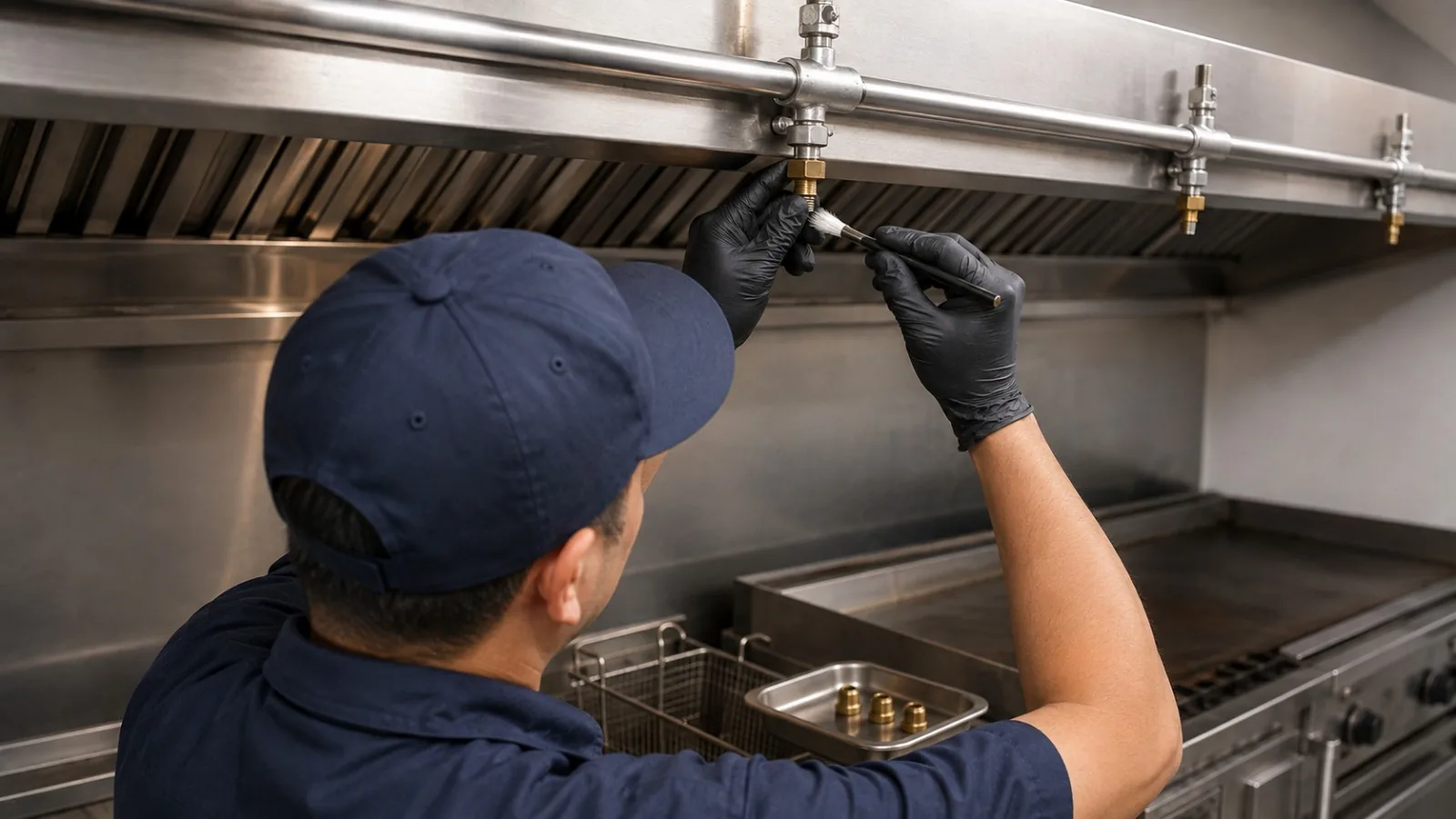
A suppression system that was correctly installed can still fail months later if it isn't serviced. Grease build-up on nozzles, a damaged detection line, or low agent pressure can all delay activation exactly when it's needed. Inspection intervals are generally set at a routine schedule, commonly checked every six months, on top of the applicable fire code, the system manufacturer's requirements and the local fire authority, rather than left to whenever someone remembers. A service visit typically checks the detection line, nozzles, piping and control panel, and confirms the system would activate correctly if called on. See Inspection Services and Preventive Maintenance for what each visit covers. If a system has discharged, Refilling & Recharge covers the full restoration process. For ongoing cover, Annual Maintenance Contracts and Emergency Service Support are available.
Why Choose Kites Safety?
- Works exclusively on kitchen fire suppression and fire safety, rather than treating it as one line among many unrelated services
- 10+ years designing and maintaining systems for commercial kitchens across the Kingdom
- A technical team trained specifically on kitchen suppression systems, not general fire protection
- 24x7 emergency response for post-discharge restoration and urgent faults
- Kingdom-wide coverage from an Ad Dammam base, reaching Khobar, Dhahran, Jubail, Riyadh, Jeddah
Kitessafety has worked with contracting and industrial groups across the Kingdom. See our clients, why clients choose Kitessafety, and the industries we serve.
Our Kitchen Fire Suppression Process
| Step | What happens |
|---|---|
| 1. Site Survey | Kitchen layout, equipment and hazards assessed on site |
| 2. Design | System sized and equipment selected to match the hazard |
| 3. Supply & Installation | Cylinder, detection, nozzles and piping fitted to the hood and duct |
| 4. Testing & Commissioning | Functional testing, verification and staff training before hand-over |
| 5. Inspection | First compliance inspection scheduled and carried out |
| 6. Ongoing Maintenance | Routine servicing, refilling and emergency support for the system's working life |
Why Should You Get a Kitchen Fire Suppression Site Assessment?
A packaged system sized for a generic kitchen is a poor substitute for one designed around the appliances actually on site. A site assessment identifies exactly which appliances need coverage, how the exhaust hood and duct are configured, and what hazard class the kitchen falls under, all of which determine nozzle count, cylinder sizing and where the manual pull station and detection line need to sit. Skipping this step is how kitchens end up with a system that technically exists but doesn't actually cover every hazard on the line. See Design & Engineering for how the assessment feeds into the system design, or the fire suppression contractor overview for how a full project runs from survey through to maintenance.
Protect Your Commercial Kitchen With a Professionally Designed Fire Suppression System
A kitchen fire suppression system is not a guarantee against fire, and no honest contractor should claim otherwise. What a correctly designed, installed and maintained system does is reduce the risk that a small fire on the cooking line turns into a kitchen closure, a damaged building, or worse. Kitessafety designs, installs, tests and maintains wet chemical kitchen fire suppression systems built around each kitchen's actual equipment and layout, and stays involved after installation rather than treating it as a one-time job.
Frequently Asked Questions
What agent does a kitchen fire suppression system use, and why?
Modern kitchen fire suppression systems use a wet chemical agent rather than the dry chemical powders used in older systems. The wet chemical agent both smothers the fire and cools the cooking surface through a reaction called saponification, which prevents the fire from re-igniting once the agent has settled, something dry chemical agents can't do.
How often should a kitchen fire suppression system be tested?
Kitchen fire suppression systems are generally serviced on a routine schedule, commonly around every six months, though the exact interval is set by the applicable fire code, the system manufacturer's requirements and the local fire authority rather than a single fixed rule.
Does the system shut off the gas or electricity automatically when it activates?
Yes. A properly designed system includes a gas shut-off or equipment shutdown mechanism that cuts fuel or power to the protected cooking equipment at the same moment the suppression agent discharges.
What is the manual release station for if the system is already automatic?
The manual release station lets kitchen staff trigger the system by hand if they spot a fire before the automatic detection line reacts to the heat. It's a backup to automatic detection, not a replacement for it, and is positioned near an exit route rather than beside the hazard.
How long does a suppression agent cylinder last before it needs attention?
A cylinder holds its charge until the system discharges or a routine inspection identifies a pressure or component issue. Regular servicing checks cylinder pressure and condition so a problem is caught during an inspection rather than discovered during an actual fire.
Can a kitchen fire suppression system be connected to the building's main fire alarm?
Yes. Alarm and monitoring integration links the kitchen system's discharge signal to the wider building fire alarm, so a discharge is reported beyond the kitchen itself rather than only being noticed by whoever is standing nearby.
Serving Dammam, Khobar, Dhahran, Jubail, Riyadh, Jeddah and commercial kitchens Kingdom-wide from our base in Ad Dammam.