
Kitchen Hood Fire Suppression System in Saudi Arabia
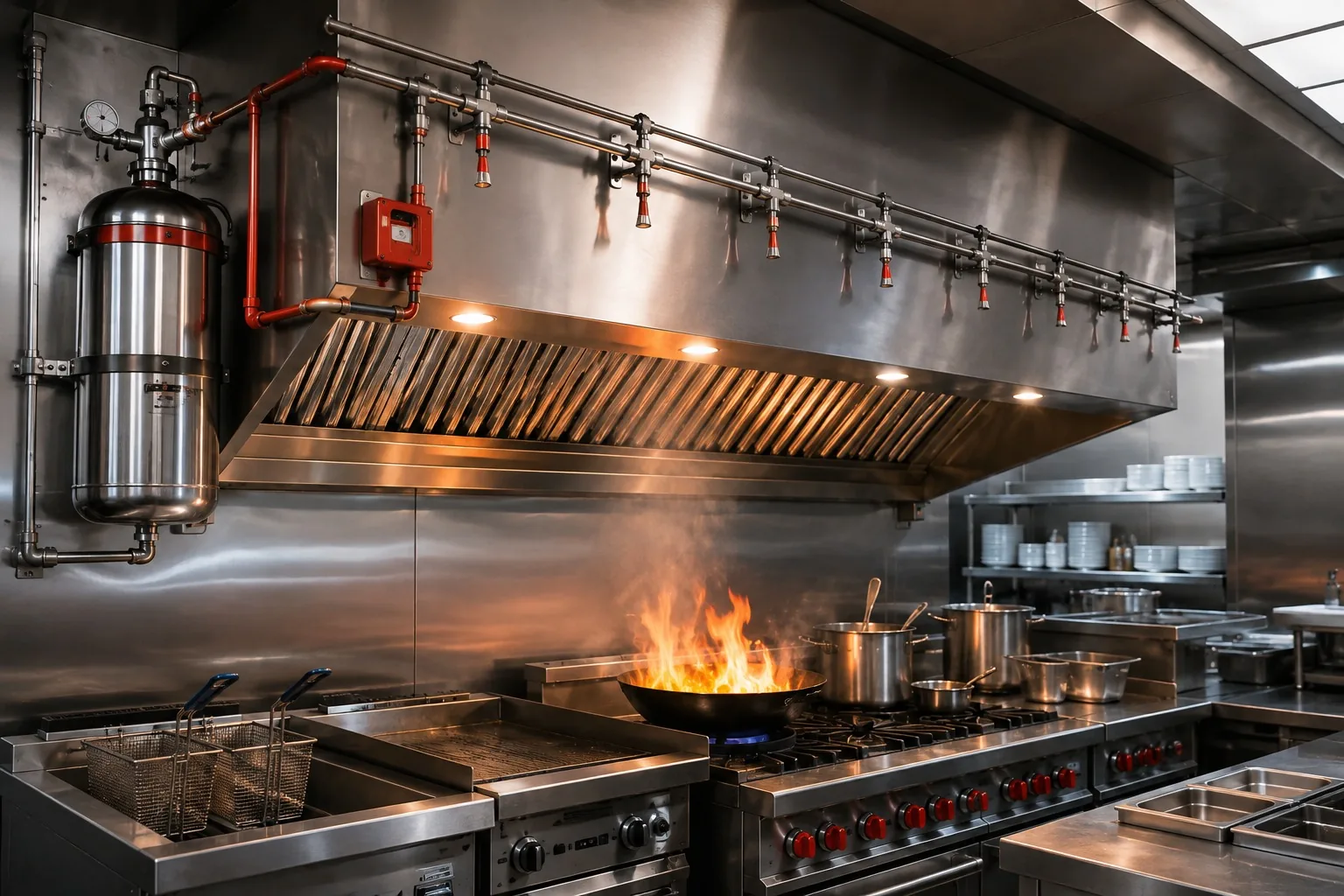
A fryer left unattended for thirty seconds, a griddle running hotter than usual, a duct that hasn't been cleaned this quarter: any one of these can turn into a kitchen fire fast. Commercial kitchens run fryers, grills, ranges and other cooking appliances where grease, oil and sustained high heat combine into one of the more serious fire risks a business can face, and a hood full of grease-laden air sitting above the line only adds to it. Kitessafety provides kitchen hood fire suppression solutions in Saudi Arabia, engineered specifically for that risk rather than adapted from general building fire protection.
Talk to Kites Advanced Fire & Safety Company in Ad Dammam: call +966 592 066 358 or email enquiry@kitessafety.com.
Why Choose Kitessafety for Kitchen Fire Protection?
Kitessafety works on kitchen hood fire suppression exclusively, not as one item on a long list of unrelated fire and security services. That focus shows up in the details: technicians who know what a grease-blocked nozzle looks like, a design process built around the actual cooking line rather than a generic package, and 10+ years doing this specific work across Saudi Arabia.
What Is a Kitchen Hood Fire Suppression System?
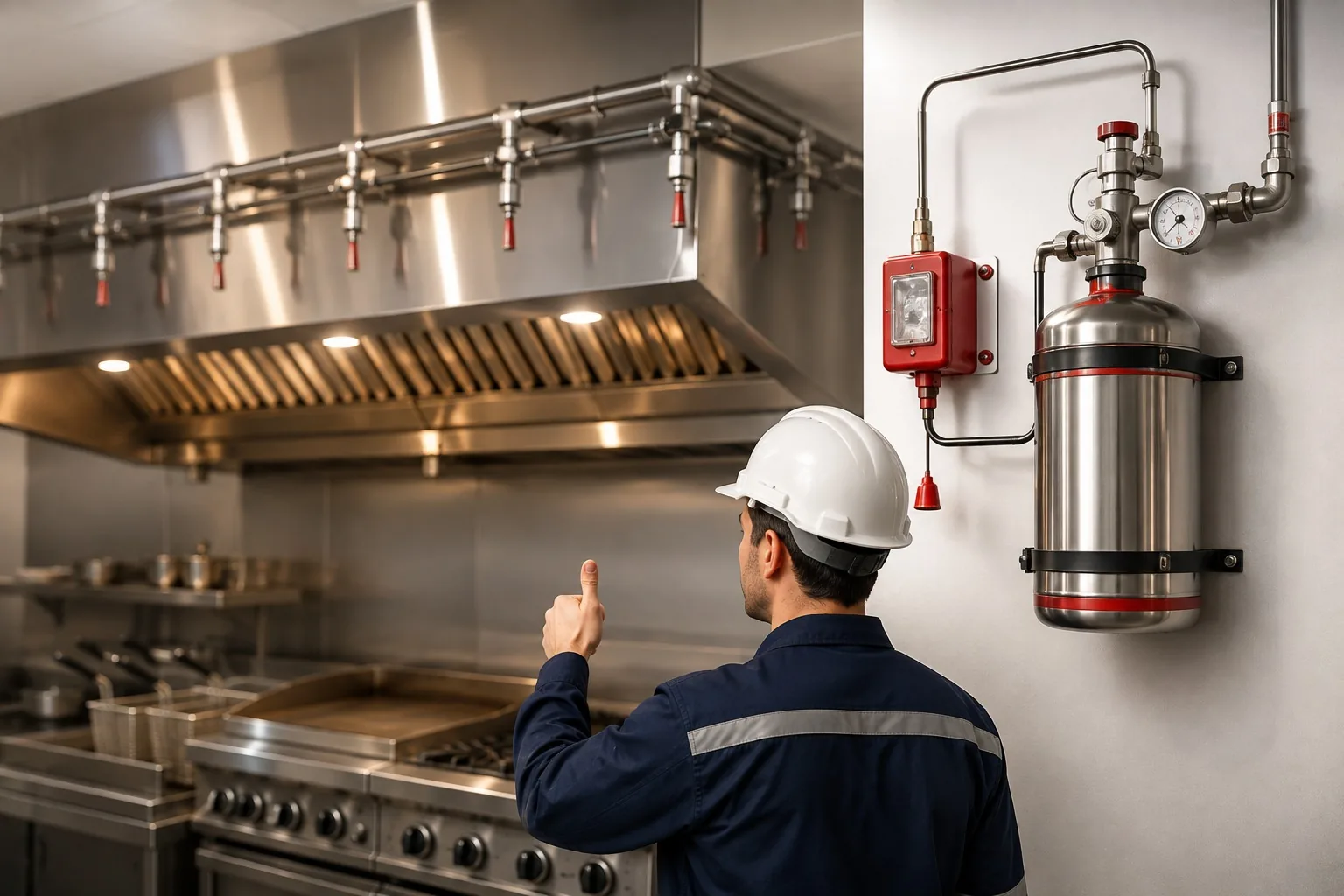
A kitchen hood fire suppression system is a fixed installation built around the exhaust hood, plenum and duct sitting above a commercial cooking line, paired with the appliances underneath it. Rather than waiting for a fire to spread into the hood before anyone reacts, the system detects heat at the source and discharges an extinguishing agent directly onto both the appliance and the hood assembly above it, treating the two as one connected hazard rather than protecting the cooktop and hoping the hood never catches.
Why Commercial Kitchens Need Dedicated Fire Suppression
A building's general sprinkler system is designed to control structure fires, not a grease fire on a fryer. Water on burning oil can cause the fire to spread rather than go out, and by the time a ceiling sprinkler activates, a kitchen fire has usually already spread well beyond the appliance where it started. A commercial kitchen fire suppression system is purpose-built for this specific hazard: it activates faster because it's positioned right above the risk, it uses an agent formulated for oil and grease fires rather than water, and it cuts fuel to the equipment at the same moment it discharges. General building fire protection and dedicated kitchen suppression aren't substitutes for each other; a compliant kitchen needs both.
How a Kitchen Hood Fire Suppression System Works
Five stages take a kitchen from a developing fire back to a safe, operating line:
Fire Detection
Heat-sensitive detectors positioned above the cooking equipment sense rising temperature before flames have a chance to spread into the hood.
System Activation
Once heat crosses the rated threshold, the system triggers automatically — no one needs to spot the fire or reach a manual station first.
Suppression Agent Discharge
A wet chemical agent releases through nozzles positioned over the appliance, hood and duct, smothering the fire and cooling the surface so it doesn't reignite.
Cooking Equipment Shutdown
Gas or electrical supply to the protected equipment cuts automatically in the same moment, removing the fuel source that's feeding the fire.
Fire Control & System Reset
Once the fire is controlled, the kitchen isn't automatically safe to cook in again. The system needs a professional reset and, in most cases, a full refill before it's protective a second time, and the area should stay shut down until that's done.
What Does a Kitchen Hood Fire Suppression System Protect?
- Cooking appliances — fryers, griddles, ranges, woks, ovens, salamanders
- Open-flame equipment — charbroilers, lava rock grills, rotisseries, BBQ stations
- The exhaust hood above the cooking line
- Exhaust ducts and plenums carrying hot, grease-laden air away from the kitchen
- Grease filters within the hood assembly
See the full list of equipment Kitessafety designs around for specific appliance types.
Key Components of a Kitchen Hood Fire Suppression System
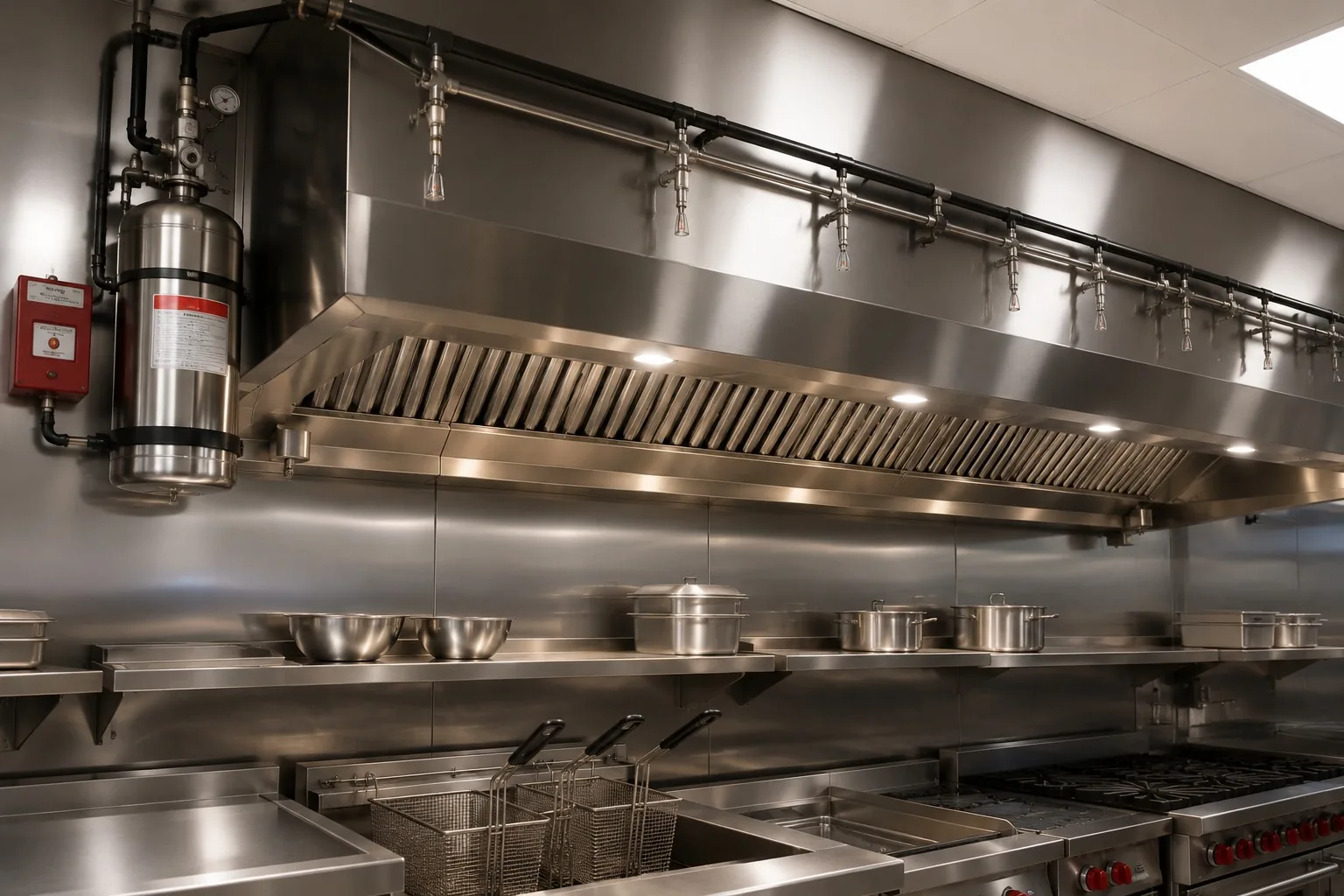
Every system is built from the same core parts: a pressurised suppression agent cylinder, a heat detection line, discharge nozzles positioned over each hazard, a piping network connecting them, a manual pull station, a control panel, a gas or electrical shut-off mechanism, and an alarm interface tying it into the wider building system. See the full breakdown of what each component does for more detail on how they work together.
Kitchen Hood Fire Suppression System Installation
Whether it's called kitchen hood fire suppression system installation or simply kitchen fire suppression system installation, the work starts with a site survey and design phase before a single component is fitted, matching the system to the kitchen's actual appliances and hood layout rather than a standard package. Installation is scheduled around build timelines for new kitchens or closure windows for existing ones being retrofitted.
Kitchen Fire Suppression System Testing & Commissioning
Before hand-over, the system is functionally tested and verified, kitchen staff are shown how it works and how to respond if it activates, and documentation is provided that supports the site's compliance record with Saudi Civil Defense. A system isn't considered complete until this stage is finished — installation alone isn't commissioning. See Testing & Commissioning for the full process.
Kitchen Fire Suppression System Maintenance
A system that isn't serviced degrades quietly: grease builds up on nozzles, detection lines take repeated heat exposure, and cylinder pressure can drift — none of it obvious until the system is actually needed. Kitessafety offers scheduled maintenance and Annual Maintenance Contracts to keep a system service-ready. For routine inspections, see the inspection services page. If a system has discharged, Refilling & Recharge covers the full restoration. For urgent faults, Emergency Service Support is available 24x7.
Types of Businesses We Serve
- Restaurants
- Hotels & Resorts
- Cafés & Bakeries
- Central Kitchens
- Hospitals
- Catering Facilities
- Food Courts
See the industries Kitessafety has worked across for more detail.
Why Choose Kitessafety?
- Kitchen hood fire suppression is the only thing Kitessafety does, not one line among unrelated fire and security services
- 10+ years of experience serving commercial kitchens across the Kingdom
- A technical team trained specifically on kitchen suppression systems and hood configurations
- 24x7 emergency response for post-discharge restoration and urgent faults
- Kingdom-wide coverage from an Ad Dammam base
- Quality, industry-recognised fire suppression equipment
Kitessafety has worked with contracting and industrial groups across the Kingdom. See our clients and why clients choose Kitessafety.
Our Kitchen Fire Suppression Process
| Step | What happens |
|---|---|
| 1. Site Survey | Kitchen layout, equipment and hazards assessed on site |
| 2. Design | System sized and equipment selected to match the hazard |
| 3. Supply & Installation | Cylinder, detection, nozzles and piping fitted to the hood and duct |
| 4. Testing & Commissioning | Functional testing, verification and staff training before hand-over |
| 5. Inspection | First compliance inspection scheduled and carried out |
| 6. Ongoing Maintenance | Routine servicing, refilling and emergency support for the system's working life |
Kitchen Hood Fire Suppression Services Across Saudi Arabia
Kitessafety operates from an Ad Dammam base and reaches commercial kitchens across the Eastern Province and beyond, including Khobar, Dhahran, Jubail, Riyadh, Jeddah. A hotel kitchen in Jeddah and a central kitchen supplying multiple restaurant branches in Riyadh face the same underlying hazard — cooking equipment, grease and heat — even though the buildings around them look nothing alike, and the same kitchen fire safety standard applies regardless of city. For full-project contracting from survey through to maintenance, see the fire suppression contractor overview.
Protect Your Kitchen. Protect Your Business.
A kitchen fire doesn't just damage equipment; it can shut a business down for weeks and put staff at real risk. Professional kitchen fire safety, built around your specific cooking line rather than a generic package, is what stands between a small flare-up and a closed kitchen.
- +966 592 066 358
- enquiry@kitessafety.com
- 4986 King Khalid – Ar Rabi, Unit No.6, Ad Dammam 32241-8167, Kingdom of Saudi Arabia
Request a quote
Fastest response: message us on WhatsApp or email enquiry@kitessafety.com.
Frequently Asked Questions
Is kitchen hood fire suppression required by law in Saudi Arabia?
Commercial kitchens in Saudi Arabia are required to have an approved fire suppression system in place as a condition of operating, reviewed under Saudi Civil Defense and Saudi Building Code requirements. Requirements are confirmed for each specific site rather than assumed from a general rule.
Does a kitchen hood suppression system replace the need for portable fire extinguishers?
No. A fixed suppression system and portable extinguishers serve different roles — the fixed system protects the cooking line and hood automatically, while portable extinguishers, including a Class K unit for cooking oil fires, remain a standard requirement alongside it, not instead of it.
Can one system protect multiple appliances under a single hood?
Yes. A single system is commonly designed with multiple nozzles covering several appliances and the full length of hood and duct above them, sized and positioned according to what's actually on the cooking line.
What happens immediately after a kitchen hood suppression system discharges?
The area should be shut down and made safe first. The system then needs professional restoration, not just a quick refill, before the kitchen resumes normal cooking operations under that system.
Do all commercial kitchens in Saudi Arabia need the same size system?
No. System size depends on the number and type of appliances, the hood and duct configuration, and the specific hazards identified during a site survey. A single-fryer counter and a full hotel kitchen need very different systems even though both fall under the same suppression category.
How do I know if my existing kitchen hood system is still adequate?
A site assessment is the reliable way to check, comparing what the system currently covers against the equipment actually on the line today, since kitchens change equipment and layouts over time without always updating suppression coverage to match.
Serving Dammam, Khobar, Dhahran, Jubail, Riyadh, Jeddah and commercial kitchens Kingdom-wide from our base in Ad Dammam.