
Kitchen Suppression System Maintenance
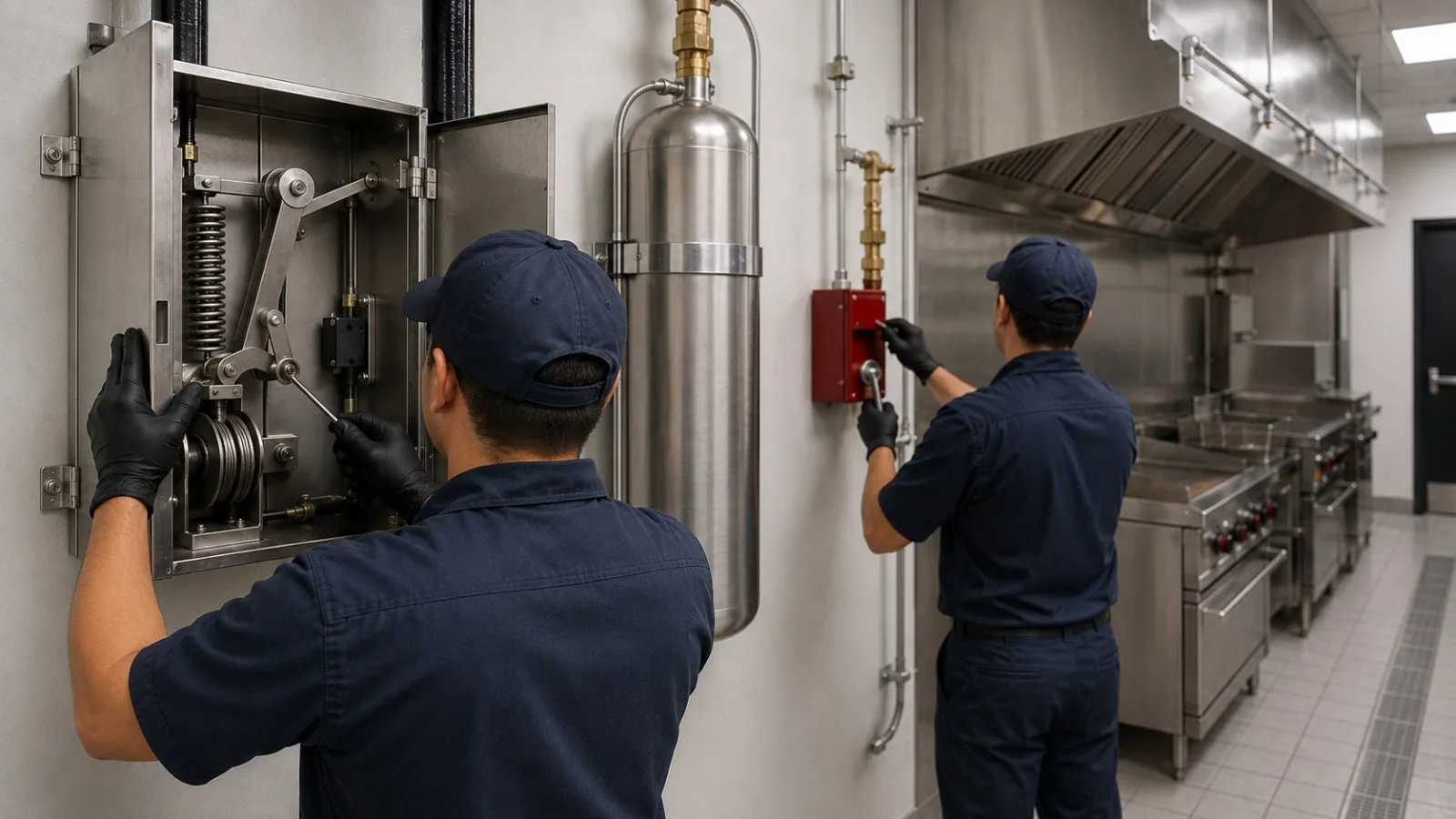
Regular commercial kitchen suppression system maintenance keeps a system inspected, operational and ready to respond to a cooking-related fire hazard, rather than something installed once and left alone. Kitessafety carries out kitchen fire suppression maintenance in Saudi Arabia across the components that make up the system: suppression cylinders, detection components, discharge nozzles, piping, the manual release mechanism, the gas shut-off mechanism, control components where installed, system connections, and the cooking equipment the system protects.
Schedule Kitchen Suppression System Maintenance
Talk to Kites Advanced Fire & Safety Company in Ad Dammam: call +966 592 066 358 or email enquiry@kitessafety.com.
Why Is Kitchen Suppression System Maintenance Important?
A system that passed commissioning still degrades over time in ways that aren't visible from the kitchen floor. Grease coats nozzles slowly, detection lines take repeated heat exposure, pressure in a cylinder can drift, and equipment on the cooking line sometimes gets moved or replaced without anyone updating the suppression coverage to match. None of that shows up until the system is actually called on, which is the worst possible time to discover a fault. Kitchen suppression system maintenance closes gaps like these before they matter, and gives a kitchen a documented record showing the system was checked and found working, not just installed and assumed fine.
What Does Kitchen Suppression System Maintenance Include?
A maintenance visit works through nine areas of the system:
Nine areas checked during a maintenance visit
System Condition Assessment
An overall check of the system as installed, confirming components are present, correctly positioned and free of obvious physical damage before anything is tested individually.
Suppression Agent / Cylinder Check
Cylinder pressure and condition are checked against the manufacturer's specification. Cylinders also require periodic hydrostatic testing on a multi-year cycle set by the manufacturer, separate from a routine service visit.
Detection Components
Fusible links or heat detectors above the cooking line are checked for grease build-up, damage and correct positioning, since a detector coated in grease responds slower than a clean one.
Discharge Nozzle Inspection
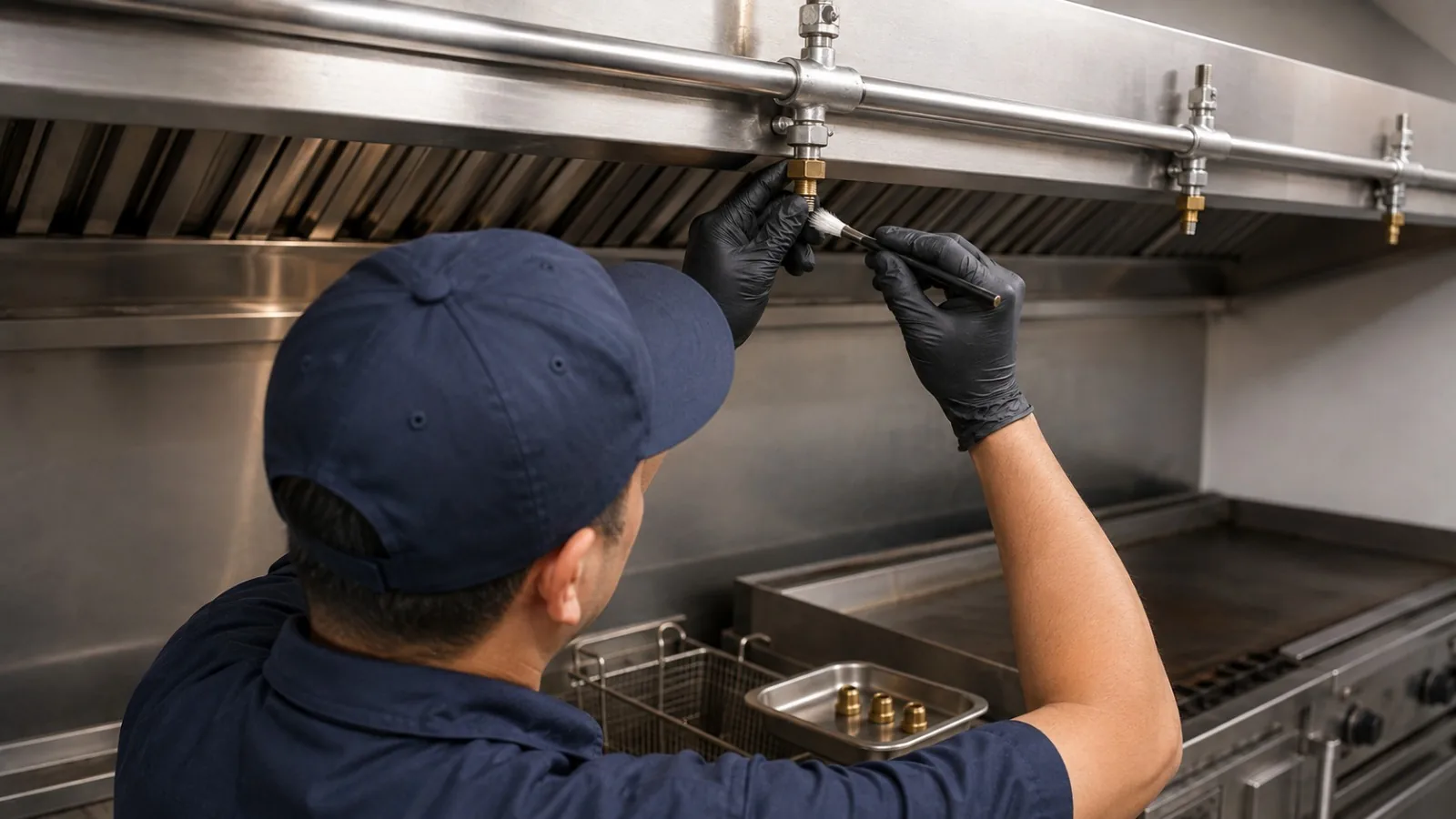
Each nozzle is checked to confirm its blow-off cap is intact, it's correctly aimed at the appliance or duct section it protects, and it isn't blocked by grease or debris.
Piping and Connections
The distribution network is checked for corrosion, physical damage and secure connections along its full run from cylinder to nozzle.
Manual Release Mechanism
The manual pull station is checked for accessibility and correct operation, confirming kitchen staff could actually trigger it by hand if needed.
Gas Shut-Off Function
The mechanism that cuts gas or electrical supply to protected equipment is functionally checked to confirm it activates in sequence with the rest of the system, not on its own separate schedule.
Alarm / Control Interface
Where the system connects to a control panel or the building's wider alarm, that interface is checked to confirm a discharge signal would actually reach it.
Protected Equipment Configuration
The cooking equipment under coverage is checked against what the system was originally designed for, since a fryer or range added or moved since installation may no longer sit under a nozzle. See the full list of equipment Kitessafety designs around.
Our Kitchen Suppression System Maintenance Process
| Step | What happens |
|---|---|
| 1. Site Survey | System condition assessed, equipment layout verified |
| 2. Cylinder & Detection | Pressure, fusible links and heat detectors checked |
| 3. Nozzles & Piping | Every nozzle and connection inspected and cleared |
| 4. Controls & Shut-Off | Manual release, gas shut-off and alarm interface tested |
| 5. Equipment Check | Cooking line matched against system coverage |
| 6. Service Record | Written report issued for compliance reference |
Components We Maintain
| Component | What's checked |
|---|---|
| Suppression Cylinder | Pressure, condition, hydrostatic test cycle |
| Detection Line | Grease build-up, damage, positioning |
| Discharge Nozzles | Blow-off cap, aim, blockage |
| Piping Network | Corrosion, secure connections, full run |
| Manual Pull Station | Accessibility, operation |
| Gas Shut-Off | Functional sequence test |
| Alarm Interface | Signal path confirmed |
| Protected Equipment | Layout matched to system design |
Kitchen Suppression System Inspection
Inspection is the compliance-focused half of a service visit: confirming the system is present, correctly tagged, accessible and free of obvious damage, and that its documentation is current. It's a narrower check than a full maintenance visit, and is often what a fire authority or insurer specifically asks to see evidence of. See Inspection Services for more on what a compliance inspection covers.
Kitchen Suppression System Testing
Testing goes further than inspection by functionally verifying that components actually work — confirming a detection line trips correctly, a nozzle path is clear, and the gas shut-off engages when triggered — without discharging the suppression agent itself in the process. A full discharge test is reserved for commissioning a new system or specific situations the manufacturer or fire authority calls for, since discharging agent means the system then needs refilling and recharge before it's protective again.
Kitchen Suppression System Cleaning and Component Care
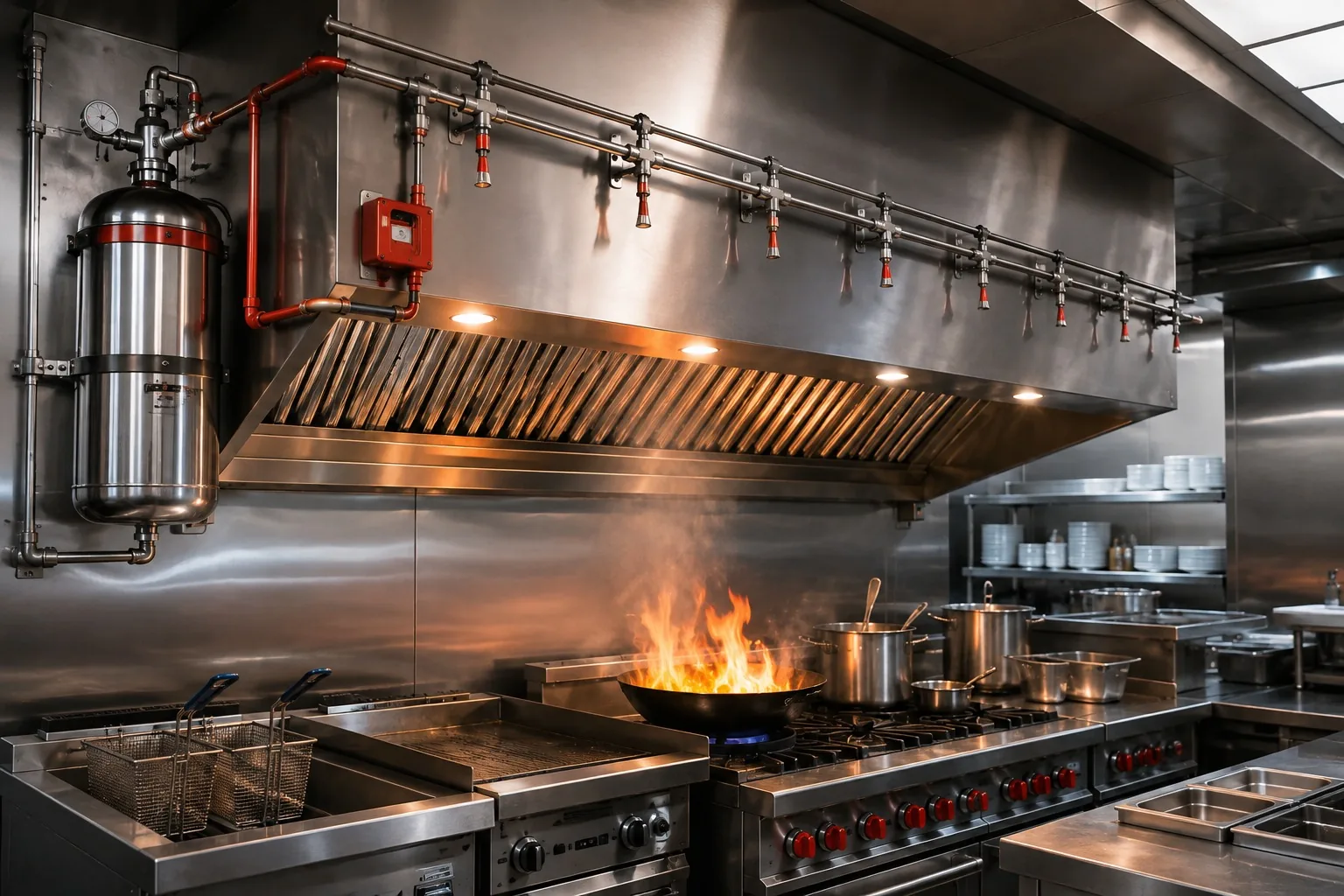
Grease is the main enemy of a kitchen suppression system's reliability, settling on nozzles, detection lines and the underside of the hood over time. Component care during a service visit includes clearing grease from nozzles and detection points and checking piping for early corrosion. It's also worth flagging to kitchen and cleaning staff that nozzles should never be painted over, taped up or repositioned during a routine kitchen clean, since even a partially blocked nozzle can change how the system discharges.
When Should a Kitchen Suppression System Be Serviced?
Service frequency depends on a mix of factors: how heavily the kitchen cooks, what the system manufacturer specifies, and what the applicable fire code and local fire authority require for the site. A high-volume kitchen running fryers all day accumulates grease faster than a light-use catering kitchen and may need more frequent nozzle and detection checks between full services. A system also needs immediate servicing after any discharge, real or accidental, and after any change to the cooking equipment on the protected line.
Installation follows design and engineering specific to the site. For the full supply and installation process, see the service page.
Preventive Maintenance vs Emergency Kitchen Suppression Repair
Preventive maintenance is what keeps a kitchen out of the emergency-repair column in the first place, though emergency repair capability still matters for the faults that get caught late or the discharge that happens despite good upkeep.
Kitchen Suppression System Annual Maintenance Contracts
An Annual Maintenance Contract bundles scheduled maintenance visits with priority technical support and emergency assistance under a single yearly agreement, rather than arranging each visit separately. For kitchens that would otherwise lose track of service due-dates, or that want faster response if something goes wrong outside a scheduled visit, an AMC generally works out more predictable than booking one-off visits as they come up. See Emergency Service Support for what's covered outside scheduled hours.
Industries We Serve
- Healthcare — hospitals, medical facilities
- Hospitality — hotels, resorts, serviced apartments
- Food & Beverage — restaurants, cafes, fast food chains, cloud kitchens
- Commercial Facilities — airports, shopping centres, government buildings
- Industrial Facilities — industrial kitchens, catering facilities
See the industries Kitessafety serves for more detail.
Why Choose Kitessafety for Kitchen Suppression System Maintenance?
- Technicians who work on kitchen suppression systems specifically, not general fire equipment across unrelated categories
- Every visit ends in a written service record, not just a verbal "all good"
- 24x7 emergency response for faults or discharges found outside a scheduled visit
- Kingdom-wide coverage from an Ad Dammam base, reaching Khobar, Dhahran, Jubail, Riyadh, Jeddah
- 10+ years maintaining systems for commercial kitchens across Saudi Arabia
See our clients and why clients choose Kitessafety.
Kitchen Suppression System Maintenance Checklist
- Cylinder pressure and condition checked against specification
- Detection line free of grease build-up and physical damage
- Every discharge nozzle clear, correctly aimed and blow-off cap intact
- Piping and connections free of corrosion and securely fitted
- Manual release station accessible and functioning
- Gas or electrical shut-off engages correctly on activation
- Alarm or control panel interface confirmed to signal correctly
- Protected equipment on the line matches the system's original design
- Service record issued and filed for compliance reference
Keep Your Kitchen Suppression System Ready With Professional Maintenance
A kitchen suppression system only works as well as its last service. Kitessafety carries out kitchen fire suppression system maintenance built around the specific components installed at your site, with a written record after every visit so you know exactly what's covered and what was checked. For a new system, see the kitchen fire suppression systems overview, or the full contractor process for design through installation.
- +966 592 066 358
- enquiry@kitessafety.com
- 4986 King Khalid – Ar Rabi, Unit No.6, Ad Dammam 32241-8167, Kingdom of Saudi Arabia
Request a quote
Fastest response: message us on WhatsApp or email enquiry@kitessafety.com.
Frequently Asked Questions
Why does a commercial kitchen suppression system need regular maintenance?
A commercial kitchen suppression system is exposed to grease, heat and daily wear that gradually affects how well it would respond in an actual fire. Regular maintenance catches a blocked nozzle, a slow detection line or a pressure issue before the system is ever called on, rather than finding out during an actual fire.
What is included in kitchen suppression system maintenance?
A maintenance visit typically covers a system condition assessment, the suppression cylinder, detection components, discharge nozzles, piping and connections, the manual release mechanism, the gas shut-off function, the alarm or control interface, and a check that the protected cooking equipment still matches the system's original design.
How often should a kitchen suppression system be inspected and serviced?
Service frequency depends on how heavily the kitchen cooks, the system manufacturer's requirements, and what the applicable fire code and local fire authority set for the site, rather than one fixed interval for every kitchen. A system also needs immediate servicing after any discharge or after cooking equipment on the line is changed.
What is checked during a kitchen suppression system inspection?
An inspection confirms the system is present, correctly tagged, accessible and free of obvious damage, and that its service documentation is current. It's a narrower, compliance-focused check compared to a full maintenance visit that also functionally tests components.
What components are inspected during kitchen suppression system maintenance?
Maintenance covers the suppression cylinders, detection components, discharge nozzles, piping, manual release mechanism, gas shut-off mechanism, control components where installed, system connections, and the protected cooking equipment itself.
How do you maintain kitchen fire suppression nozzles?
Nozzles are checked to confirm the blow-off cap is intact, the nozzle is correctly aimed at the appliance or duct section it protects, and it isn't blocked by grease or debris, since even a partially blocked nozzle changes how the system discharges when triggered.
Serving Dammam, Khobar, Dhahran, Jubail, Riyadh, Jeddah and commercial kitchens Kingdom-wide from our base in Ad Dammam.