
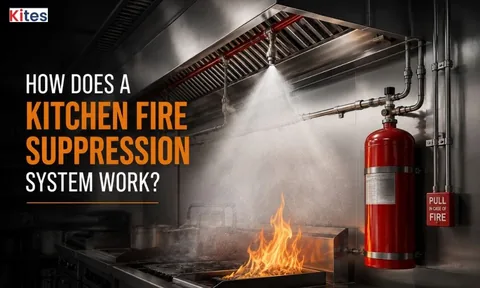
How Does a Kitchen Fire Suppression System Work?
A step-by-step look at how a kitchen fire suppression system detects, activates and suppresses a cooking fire, from ignition to alarm signal.
A commercial kitchen is one of the highest fire risk environments in any building: hot oil, open flames, gas lines and electrical equipment running for hours at a stretch, often close together in a compact space. A fire extinguisher on the wall is a last line of defence, not a restaurant fire protection system on its own; restaurants need prevention, detection, suppression, and regular inspection working together, not any single piece of equipment alone. This guide covers what restaurant fire safety Saudi Arabia regulations typically involve, and the kitchen fire safety requirements that most often come up during a civil defense review. Exact requirements depend on the facility, its equipment and applicable civil defense review, so this is a starting point for planning, not a substitute for a site-specific assessment.
Restaurant fire safety in Saudi Arabia is governed primarily through the General Directorate of Civil Defense and the Saudi Building Code's fire protection volume, SBC 801, which set the framework a facility is reviewed against before receiving civil defense approval to operate. In practical terms, that framework covers seven areas:
Commercial kitchen fire safety starts with understanding exactly what makes a kitchen more dangerous than a typical commercial space: Cooking Oils and Grease: Hot oil ignites easily and burns hotter than most other kitchen materials, and grease that builds up in hoods and ducts over weeks of service becomes additional fuel for a fire to spread. Gas-Fired Cooking Equipment: Open flames on ranges and grills sit directly beside oil, packaging and other combustible material for hours of continuous service. Electrical Equipment: Fryers, ovens and refrigeration units draw heavy loads continuously, and worn wiring or overloaded circuits are a common ignition source in older kitchens. Kitchen Hoods and Exhaust Ducts: Grease vapour condenses inside the hood and duct over time, turning the exhaust path itself into a route a fire can travel through unnoticed
Commercial kitchen fire suppression is the core of this framework. An automatic kitchen fire suppression system protects the cooking line, hood plenum and exhaust duct by discharging a wet chemical agent onto a fire the moment heat sensors detect it, while cutting fuel or power to the equipment. Kites has covered how these systems work, what they protect and how they're installed in full elsewhere; see Kitchen Fire Suppression Systems and Automatic Kitchen Hood Suppression System for the full technical breakdown. Automatic suppression matters because it activates whether or not staff notice the fire in time, which is exactly the gap a fire extinguisher alone cannot close in an unattended moment on a busy line.
A kitchen fire suppression system protects the cooking line itself, but extinguishers are still required as a first-response tool for fires that start elsewhere in the kitchen or haven't reached the suppression system's coverage area. Extinguishers rated for cooking-oil and grease fires should be mounted within reach of the cooking line and other high-risk equipment, checked regularly, and never treated as a substitute for automatic suppression over the cooking equipment itself.
The hood and duct are where a cooking-line fire most often spreads beyond the point it started, since accumulated grease inside both acts as fuel. Fire protection here typically combines automatic suppression nozzles positioned inside the hood and duct with a routine grease-cleaning schedule; a suppression system installed over a duct that is never cleaned is still protecting a fire hazard that keeps rebuilding itself.
Smoke and heat detectors placed through the kitchen and dining areas, connected to a monitored fire alarm panel, are what alert staff and, where integrated, emergency services to a fire outside the immediate cooking line, such as in storage areas, electrical rooms or the dining floor. A kitchen suppression system protects the cooking equipment; the alarm and detection system covers everywhere else in the building.
Restaurant fire safety planning has to account for getting staff and guests out safely, not only extinguishing the fire. Saudi Civil Defense's published safety instructions for commercial premises require at least two separate exits each leading directly outside, with corridors kept clear and unobstructed, and stairwells separated from the rest of the building by fire-resistant walls and doors to stop fire and smoke spreading into the escape route. Exit routes blocked by stored stock, extra seating or parked equipment are one of the most common issues found during a civil defense inspection.
● Gas shut-off valves accessible and clearly marked, not buried behind equipment ● Regular checks for gas leaks at connection points, particularly after any equipment is moved or serviced ● Electrical circuits sized for actual kitchen equipment load, not extended informally with additional sockets over time ● Worn or damaged wiring and plugs replaced rather than taped or temporarily patched
Every system above only works if it is tested on a schedule, not left in place and assumed to still function. Suppression systems need periodic professional inspection and recharge after any activation, fire extinguishers need visual checks and service tags, alarm panels need functional testing, and exits need to stay actually clear on every shift, not only before an inspection visit.
Get Your Restaurant's Fire Systems Assessed Kites Safety supports restaurants and commercial kitchens across Saudi Arabia with inspection, testing, commissioning, preventive maintenance and fire-system servicing. Contact our team for a fire safety assessment, or call +966 592 066 358
Inspection frequency depends on the system and the equipment's service conditions, and Kites' preventive maintenance and annual maintenance contracts are built around keeping every system, suppression, extinguishers and alarms alike, on a fixed schedule rather than reactive one-off visits after something is already overdue.
Common Fire Safety Mistakes Restaurants Should Avoid
● Treating a fire extinguisher as a substitute for an automatic kitchen suppression system ● Letting stored stock, extra furniture or equipment block a marked exit route ● Skipping suppression system inspection after the system has already discharged once ● Assuming hood and duct cleaning is optional once a suppression system is installed
Kites Advanced Fire & Safety Company works with restaurants and commercial kitchens across Saudi Arabia on the full lifecycle of kitchen fire protection: design and engineering, supply and installation, testing and commissioning, inspection, refilling and recharge, preventive maintenance, annual maintenance contracts, and emergency service support, covering Dammam, Khobar, Dhahran, Jubail, Riyadh, Jeddah and commercial kitchens Kingdom-wide.
Restaurant fire safety in Saudi Arabia requires more than a single piece of equipment on the wall. Real protection covers the cooking equipment, the hood and exhaust system, gas and electrical hazards, detection, evacuation routes, and the suppression system that ties them together, backed by inspection that confirms everything still works. Restaurant owners are best served by having every one of these systems professionally assessed together, rather than checked off individually.
What are the fire safety requirements for restaurants in Saudi Arabia? Restaurant fire safety requirements in Saudi Arabia generally cover kitchen fire suppression, fire extinguishers suited to cooking-oil fires, smoke and heat detection, marked emergency exits, gas and electrical safety, and regular inspection, reviewed by the General Directorate of Civil Defense before a restaurant is approved to operate.
Is a kitchen fire suppression system mandatory for restaurants in Saudi Arabia? Commercial kitchens using grease-producing cooking equipment are generally expected to have automatic fire suppression as part of civil defense approval. Confirm the exact requirement for your specific premises with your local civil defense office.
What type of fire extinguisher is needed in a commercial kitchen? Commercial kitchens need extinguishers rated for cooking-oil and grease fires, mounted within reach of the cooking line, in addition to an automatic suppression system covering the equipment itself.
How many emergency exits does a restaurant need in Saudi Arabia? Saudi Civil Defense's published safety instructions for commercial premises call for at least two separate exits leading directly outside, with corridors and stairwells kept clear and fire-separated from the rest of the building.
How often should a restaurant's fire safety systems be inspected? Inspection frequency depends on the specific system and how heavily the kitchen is used, but every system, suppression, extinguishers and alarms alike, needs a fixed inspection schedule rather than one-off checks.
What should a restaurant owner check before opening a commercial kitchen? Before opening, confirm the kitchen suppression system is installed and commissioned, extinguishers are rated and tagged, detectors are connected to an alarm panel, at least two exits are clear, gas lines are leak-checked, and the hood and duct are cleaned and suppression-covered.
What is the most common fire safety mistake restaurants make? Treating a fire extinguisher as a substitute for an automatic kitchen suppression system is one of the most common mistakes, since an extinguisher depends on a person noticing and reacting to a fire in time, while automatic suppression does not.
Does Kites Safety serve restaurants outside Riyadh and Dammam? Yes. Kites Advanced Fire & Safety Company covers commercial kitchens across Dammam, Khobar, Dhahran, Jubail, Riyadh, Jeddah, and commercial kitchens Kingdom-wide.
Need help with kitchen fire suppression? Contact Kites
More from the blog
A step-by-step look at how a kitchen fire suppression system detects, activates and suppresses a cooking fire, from ignition to alarm signal.
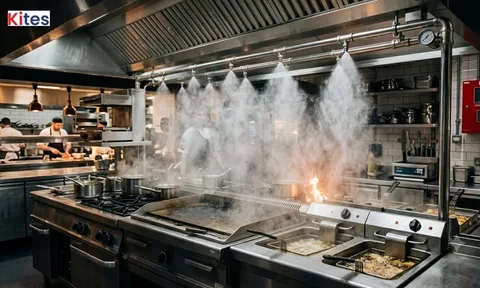
How a wet chemical fire suppression system actually stops a commercial kitchen fire, the chemistry behind it, and how it compares to sprinklers.
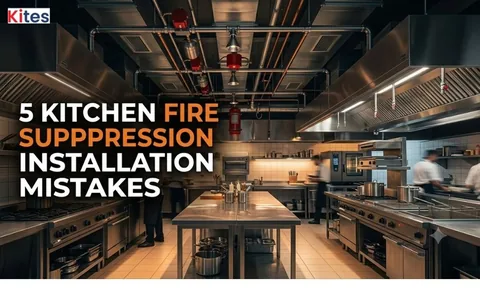
Five common kitchen fire suppression system installation mistakes, what they lead to, and how to avoid them before your system is put to the test.
24x7 Emergency Service
System discharged, or due an inspection?
Talk to a kitchen fire suppression specialist in Ad Dammam. We cover commercial kitchens across Kingdom of Saudi Arabia.