How to Choose a Commercial Kitchen Fire Suppression Company in Saudi Arabia
To choose a commercial kitchen fire suppression company in Saudi Arabia, check seven things: commercial kitchen experience, knowledge of Civil Defense and Saudi Building Code requirements, system quality, tested installation, scheduled maintenance, 24x7 emergency support, and an itemised quote with written records. Get each answer in writing before you sign.
A grease fire can move from a fryer into the hood and up the duct before anyone has unclipped an extinguisher. By then the equipment, the staff on shift and the building are all exposed, and the only thing standing between them and the fire is a system someone designed, installed and has serviced since. That someone matters as much as the hardware. Here is how to pick a commercial kitchen fire suppression company in Saudi Arabia, what proof to ask for, and which questions separate a specialist from a salesman.
Why Commercial Kitchens Need a Fire Suppression System
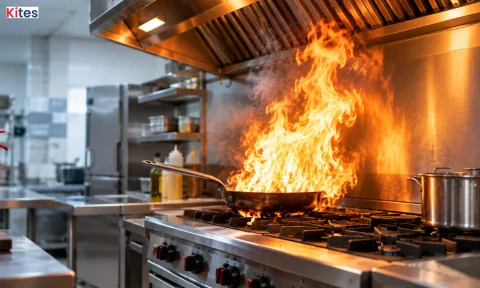
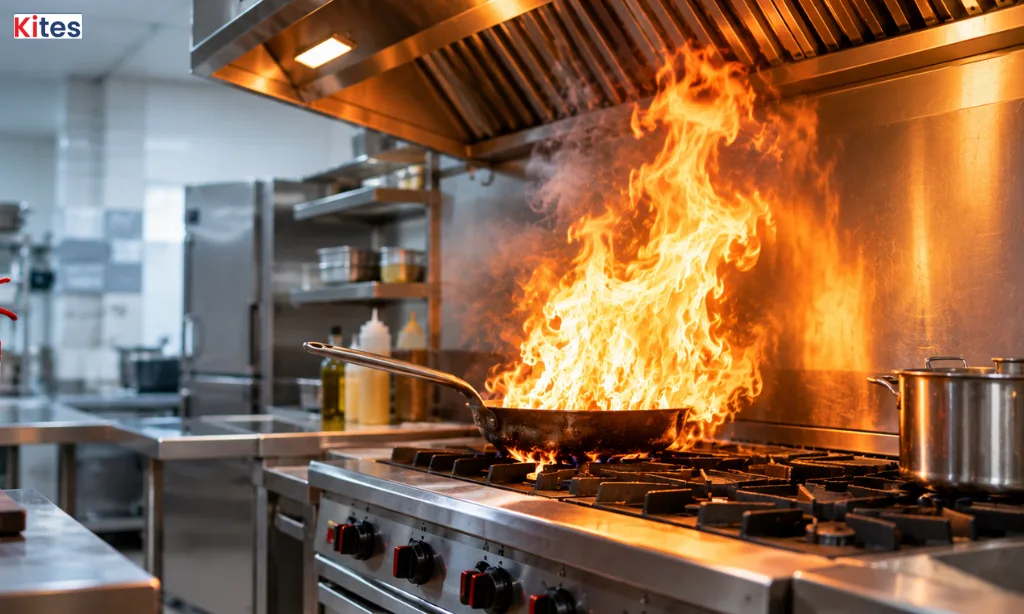
Cooking oil ignites when it overheats, and a fryer, wok or charbroiler can get there faster than a cook can react. Water can throw burning oil outward, and a flame knocked down can flare again if the oil stays hot. Commercial kitchen fire safety starts from that fact. The larger hazard sits above the cooking line. Grease collects in the filters, the plenum and the duct, so a flare-up at the fryer can enter the exhaust and travel out of sight. The standard for this equipment, NFPA 96, is titled "Standard for Ventilation Control and Fire Protection of Commercial Cooking Operations": the exhaust path counts as much as the appliance. More in our post on kitchen hood and duct fires.
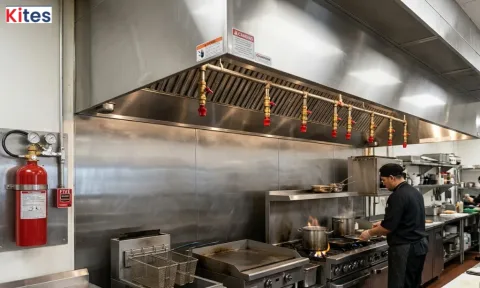
A fixed system answers this with automatic detection, wet chemical discharge over each appliance and into the hood and duct, and gas or electrical shutdown. It only works if the right company specified it. The full argument is in our guide on why every commercial kitchen in Saudi Arabia needs fire suppression.
7 Factors to Consider When Choosing a Kitchen Fire Suppression Company
Searching "kitchen fire suppression system Saudi Arabia" mostly returns exhibitor listings, directory entries and product brochures. They show who sells equipment, not who will still answer the phone in year three. These seven factors fill that gap.
1. Experience in Commercial Kitchen Fire Protection
A contractor who spends most of its time on alarms or sprinkler pipework has seen fewer fryer lines and shared ducts than one that works on kitchens daily. Ask how long the company has worked on kitchens, in which settings, and ask to phone two of those clients. Repeat business matters more than years in business: a client that keeps renewing a maintenance contract has watched the work up close.
2. Knowledge of Saudi Fire Safety Requirements
Kitchens are reviewed against the Saudi Building Code fire provisions (SBC 801) and by the General Directorate of Civil Defense, as our guide to fire safety requirements for restaurants in Saudi Arabia explains. A competent contractor can tell you which approvals your site type needs and hands over design and commissioning records that support the process. It will not promise approval; only the authority grants it. Ask what documents you receive at hand-over; a vague answer means a vague grasp of the process.
3. Quality of Kitchen Hood Fire Suppression Systems
A kitchen hood fire suppression system is only as good as its listing and its fit to your appliances. NFPA 17A covers the design, installation, testing and maintenance of wet chemical systems, and UL 300 is the usual test reference for commercial cooking equipment. Ask for three things in the quote: • The brand and model of the system, not "industry-recognised equipment" • The standard it was tested and listed to • Confirmation that components are specified as a matched set Mixing parts from different suppliers is one of the usual reasons a system fails its functional test. Our page on the kitchen hood fire suppression system lists the components a complete installation includes.
4. Professional Installation and Testing
Good equipment still fails when fitted badly. Detection line tension, nozzle aim and link positioning decide whether a system passes its functional test. Fire suppression system installation should begin with a survey of every appliance, then design, installation into the hood and duct, shutdown integration, functional testing, commissioning and training. A quote built from a phone call skips the first step and guesses the rest. Five recurring errors have their own post: kitchen fire suppression installation mistakes.
5. Inspection and Preventive Maintenance Services
Kitchen fire suppression maintenance is where weak contractors drop away. Grease coats detectors, nozzles get capped or moved, and cylinders lose pressure. Ask who schedules the visits, what each visit checks, and if a written record follows, not a verbal "all good". Our kitchen suppression system maintenance page lists the nine areas a visit should cover. Also ask whether the company will take over a system someone else installed; a sound answer begins with a condition assessment. For reference, this is how one published summary of the standards divides the work:
| Task | Typical frequency | Done by |
|---|---|---|
| Suppression system inspection and service | Semiannual | A trained and certified person; tag updated |
| Fusible-link and glass-bulb detection elements | Monthly (solid fuel) to annual (low volume), set by cooking volume | A trained, qualified and certified cleaning company |
| Hood, duct and fan cleaning | Replaced at least semiannually | The servicing technician |
| Seals, pressure gauge, nozzle caps and pull station | Monthly | The kitchen owner or staff |
6. Emergency Support and Response Time
After a discharge, the kitchen is unprotected until the system is recharged and re-tested, so every day of delay means staying shut or cooking without cover. Ask for 24x7 availability in writing, the service base nearest your site, and a response window for your address. "It depends on location" is an honest answer: a team based in Dammam reaches Khobar faster than Jeddah, and a contractor promising the same hour everywhere in the Kingdom is selling a promise. For one provider's version of this, see the emergency service support page.
7. Transparent Pricing and Service Documentation
Cost depends on kitchen size, the number of appliances, the hood and duct configuration and whether the job is a new build or a retrofit, so a firm price before a site survey is a guess. Ask for an itemised quote covering survey and design, each appliance with its nozzle count, hood and duct coverage, gas and electrical shutdown, testing and commissioning, the first inspection, any maintenance contract, and what is excluded. Compare quotes line by line; a lower total that protects fewer appliances is not cheaper. Then ask what paper you will hold at the end: design drawings, the commissioning record and a service record after each visit.
Which Commercial Kitchens Need Fire Suppression Systems?
Any commercial kitchen with grease-producing equipment under a hood is generally expected to have an approved automatic system, and a restaurant fire suppression system is the usual form it takes. Requirements are confirmed site by site, so check yours with the local Civil Defense office. The site type changes what to ask a contractor:
Questions to Ask Before Hiring a Commercial Kitchen Fire Suppression Company in Saudi Arabia
Send the same list to every company on your shortlist.
- How many commercial kitchens do you protect, and can I phone two of them?
- Which approvals and records will you provide for Civil Defense review?
- Which standard is the system tested and installed to, and which brand and model will go in my kitchen?
- Will someone survey every appliance, the hood and the full duct before quoting?
- Who installs, who tests, and do I receive a commissioning record and staff training?
- How often will you inspect, and do you schedule the visits or do I?
- What is your response window at my address, and is the emergency line staffed around the clock?
- Will you take over a system another contractor installed, and what does your assessment involve?
- What does this quote exclude? Keep the written replies; a company that answers in writing can be held to its answer.
How Kites Safety Approaches Commercial Kitchen Fire Protection
Kites Advanced Fire & Safety Company, known as Kites Safety, is based at 4986 King Khalid - Ar Rabi, Unit No.6, Ad Dammam 32241-8167. It states 10+ years of experience and works only on fire suppression and fire safety, with commercial kitchens as its specialism. Its eight service lines run from design and engineering through inspection, refilling and maintenance contracts to 24x7 emergency support, and its systems use wet chemical agent. Its process runs from site assessment through installation into the hood, duct and cooking line to testing, commissioning with client training, a first compliance inspection and ongoing maintenance. It documents systems to support Civil Defense approval and takes over maintenance of systems other contractors installed. The fire suppression contractor page sets this out in full. Coverage includes Dammam, Khobar, Dhahran, Jubail, Riyadh and Jeddah, plus commercial kitchens across the Kingdom. Response time depends on location and the work required, and Kites says so before you commit. Its customers page shows 12 client organisations. Put the nine questions above to Kites as you would to any shortlisted company.
Making the Final Choice Between Fire Suppression Companies
Shortlist two or three specialists. Send each the same equipment list, collect written answers to the nine questions, and compare quotes line by line. Weigh documentation, maintenance and emergency support above the headline price, because a commercial kitchen fire suppression company in Saudi Arabia is a long-term service partner, not a one-off supplier.
Want a site assessment for your commercial kitchen? Contact Kites Safetyon +966 592 066 358 (24x7 emergency line) or at enquiry@kitessafety.com.
Frequently Asked Questions
How do I choose a commercial kitchen fire suppression company in Saudi Arabia?
Shortlist companies that specialise in commercial kitchens, then compare them on seven points: experience, Civil Defense and Saudi Building Code knowledge, system quality, installation and testing, maintenance, emergency support, and itemised pricing with written records.
Does a restaurant in Saudi Arabia need a fire suppression system?
Commercial kitchens with grease-producing equipment are generally expected to have an approved automatic system, reviewed under Saudi Civil Defense and the Saudi Building Code. Requirements are confirmed site by site, so check yours with the local Civil Defense office.
How much does a commercial kitchen fire suppression system cost in Saudi Arabia?
Cost depends on kitchen size, appliance count, hood and duct configuration, and whether the job is a new build or a retrofit. A fair quote follows a site survey and is itemised, so compare quotes line by line instead of by the total.
How often should a kitchen fire suppression system be inspected?
An Inspect Point summary of NFPA 17A (March 2026) lists semiannual inspection and service by a trained and certified person. Your interval depends on the fire code, the manufacturer and the local authority, and service is also needed after any discharge or equipment change.
What should a kitchen fire suppression quote include?
It should itemise survey and design, each appliance protected, hood and duct coverage, shutdown integration, testing, commissioning, the first inspection and any maintenance contract, and state what is excluded. A lump sum with no appliance count is a warning sign.
Can a new company take over maintenance of a system another contractor installed?
Many contractors will, after a condition assessment. Ask for it in writing, because it becomes the documented starting point for every later inspection.
What should I do after a kitchen fire suppression system discharges?
Make the area safe, stop cooking and call the fire service if the fire is not fully out. Then arrange professional restoration, because the kitchen is unprotected until the system is recharged and re-tested.
About the Author
• Kites Safety (Kites Advanced Fire & Safety Company) is a commercial kitchen fire suppression specialist in Ad Dammam, Saudi Arabia, offering design, supply and installation, testing, inspection, refilling, maintenance contracts and 24x7 emergency support. About Kites Safety • Reviewed by L K Monu Borkala, a digital marketing strategist with 20+ years of SEO experience and over 650 client campaigns across India and UAE. As a founding member of OneCity Technologies, Bangalore, he oversees content strategy, editorial compliance, and SEO frameworks across education, business services, and digital marketing verticals.
Need help with kitchen fire suppression? Contact Kites
0 Comments
Leave a comment
More from the blog