
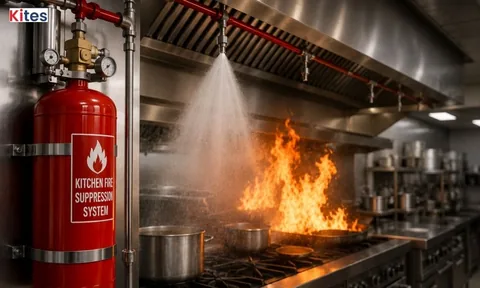
Fire Safety Requirements for Restaurants and Commercial Kitchens in Saudi Arabia
Fire safety requirements for restaurants in Saudi Arabia: suppression, extinguishers, alarms, exits, gas and electrical safety, and inspection, explained.
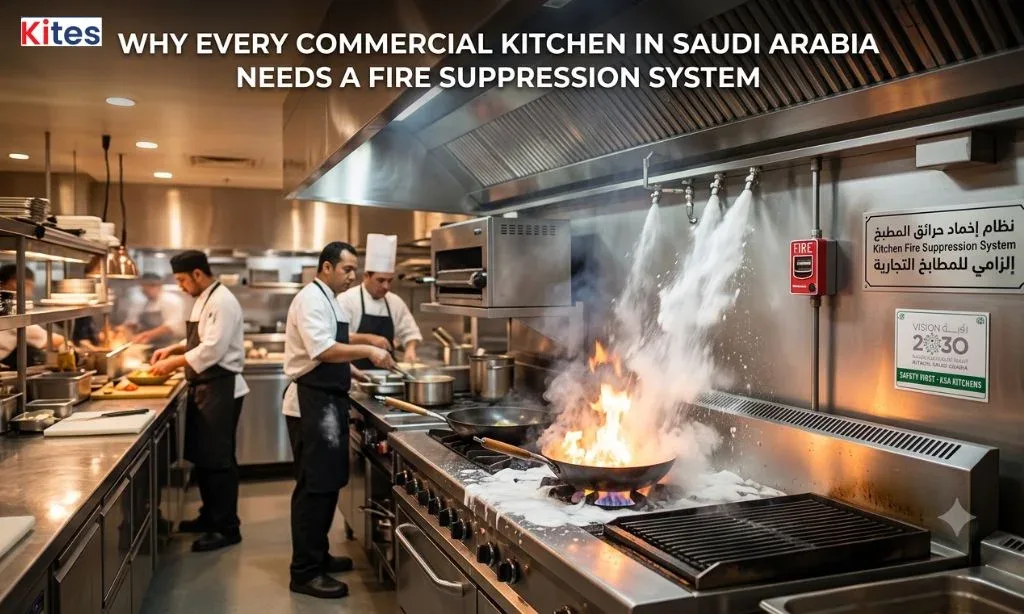
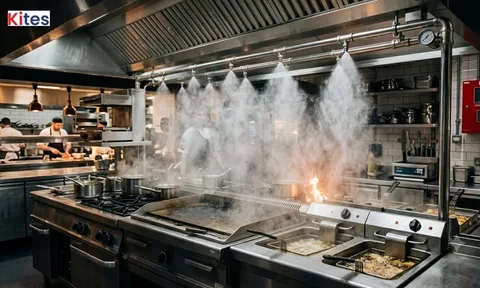
A commercial kitchen fire suppression system in Saudi Arabia is essential because commercial kitchens combine cooking oil, grease, gas and high heat in a way ordinary fire protection isn't built to handle, and a fire that starts at one appliance can spread through the exhaust hood and duct within moments. An automatic system detects heat, discharges an agent onto the fire, and cuts the fuel supply, all before the fire has a chance to spread beyond where it started.
A commercial kitchen isn't just a room with more stoves in it; it's a meaningfully different fire risk from almost anywhere else in a building. Cooking oil sits at temperatures well above what a general-purpose extinguisher is built for, grease accumulates on surfaces and inside the exhaust system over time, gas lines feed the cooking equipment directly, and electrical appliances run for hours on end under constant heat and moisture. Any one of these on its own is manageable; together, they create a fire risk that ordinary fire safety measures weren't designed around. A small fire at a single fryer can travel upward into the hood and along a grease-lined duct in moments, turning a contained incident into one that threatens the whole kitchen and the building above it. Automatic fire suppression exists specifically to close that gap, and in Saudi Arabia, having the right system in place isn't just good practice; it's also what's expected under applicable fire-safety requirements for commercial kitchens. This article walks through why the risk is different, what a suppression system actually does, and what to look for when choosing one.
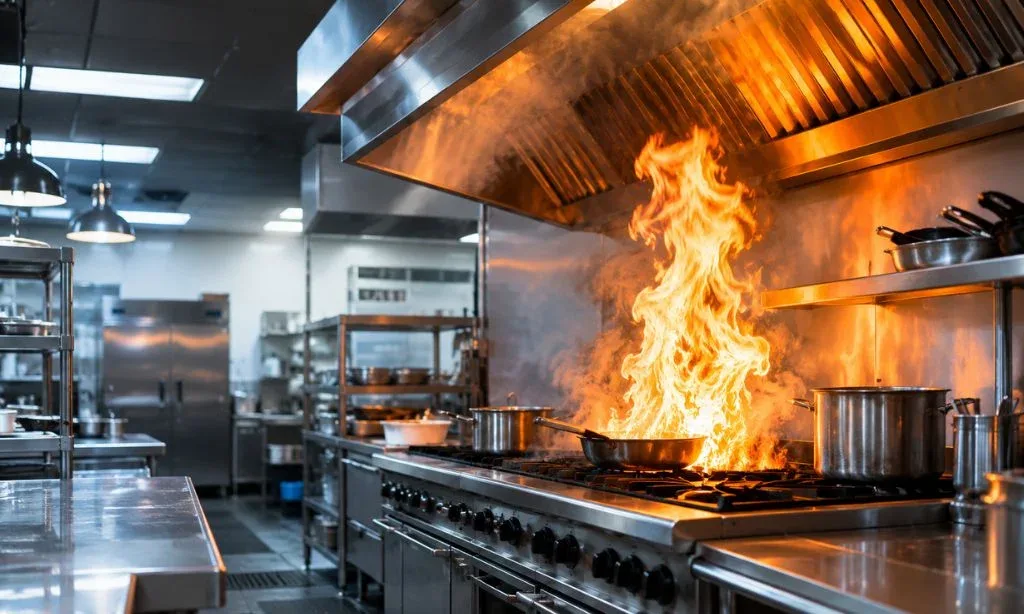
A kitchen fire suppression system Saudi Arabia kitchens rely on is a fixed, automatic installation that detects heat above a cooking line and discharges a liquid extinguishing agent directly onto the fire, the appliance, and the surrounding hood and duct, while simultaneously cutting the gas or electrical supply. It's purpose-built for the specific combination of heat, grease and fuel a commercial kitchen presents, rather than adapted from general building fire protection.
A heat-sensitive detection line positioned above the cooking equipment triggers the system once temperatures reach a set threshold. The system then discharges an alkaline agent onto the fire, which reacts with the hot cooking oil through a chemical process called saponification, forming a soapy layer that both smothers the flame and cools the oil below the point where it would reignite. At the same moment, the system cuts the gas or electrical supply to the affected appliance, so the fire isn't still being fed once the flame is out. For a full breakdown of this chemistry, see our guide to how wet chemical fire protection works.
Beyond the basic physics of grease fires, Saudi Arabia's commercial kitchen sector, restaurants, hotels, hospitals, catering operations, cloud kitchens, has grown quickly, and with that growth comes a genuine expectation from fire authorities, insurers and landlords that kitchens operating fryers, grills and open-flame equipment have proper suppression coverage in place. A system that's correctly designed, installed and maintained protects staff and customers, protects the business from an extended shutdown after a fire, and keeps a kitchen compliant with applicable fire-safety requirements rather than exposed to them.
Treating the appliance, hood and duct as one connected hazard, rather than protecting the cooktop alone, is what a properly designed kitchen hood fire suppression system does and what closes the gap a fire would otherwise use to spread. See our full breakdown of the equipment we protect for more detail.
Wet chemical agent is the current standard for commercial kitchen suppression because it does two things older dry chemical agents didn't: it smothers the fire and cools the fuel below its reignition point. A dry chemical agent can put a visible flame out while leaving the oil hot enough to catch again within moments; wet chemical's cooling effect is specifically what prevents that. This is also the reason UL 300, the modern testing standard for kitchen fire suppression, effectively established wet chemical as the standard for commercial cooking equipment.
| Kitchen Fire Suppression | Fire Sprinklers | |
|---|---|---|
| Agent | Alkaline liquid formulated for cooking oil fires | Water |
| Effect on burning oil | Smothers and cools via saponification | Can cause oil to splatter and spread, or trigger a steam reaction |
| Coverage | Targeted at the cooking line, hood and duct | General area coverage, not calibrated to a specific fuel |
Water and hot cooking oil don't mix safely, which is exactly why a standard sprinkler system isn't a substitute for dedicated kitchen suppression over the cooking line, even where the rest of the building has its own fire protection.
A kitchen fire that isn't suppressed quickly can spread through the hood and duct system well beyond the appliance where it started, putting the rest of the building at risk, not just the kitchen. Beyond the immediate safety risk to staff and customers, an uncontrolled fire typically means an extended closure while the kitchen and its exhaust system are repaired, damaged equipment that needs replacing, and, depending on the circumstances, insurance and compliance complications that a properly protected kitchen wouldn't face.
A restaurant fire suppression system is the most common example, but coverage extends well beyond restaurants alone:
Nozzles are positioned based on the specific appliance, its size, and its position along the cooking line, aimed to cover the appliance surface, the hood plenum and the duct entry, not placed by rough visual estimate. Correct nozzle placement is calculated during system design, not guessed on site, since even a slightly misaligned nozzle can leave a real gap in coverage that isn't visible until the system is tested against an actual fire.
Most of the gaps that leave a kitchen under-protected happen quietly during installation: a system sized against an assumption rather than a real site survey, a duct left outside the design, a nozzle placed by estimate rather than calculation, or a shutdown mechanism installed but never actually tested. None of these show up on a casual look at the finished system; they only surface when the system is called on for real. For a closer look at exactly what goes wrong and how to avoid it, see our guide to common kitchen fire suppression installation mistakes.
Cost depends on kitchen size, the number and type of appliances needing coverage, hood and duct configuration, and whether the project is a new installation or bringing an existing kitchen up to standard. Rather than a single fixed figure, the reliable way to budget is a proper site survey that reflects your kitchen's actual equipment and layout, since a generic quote based on square footage alone tends to under- or over-specify the system.
CTA : Request a site assessment from Kites Safety for a project-specific quotation
Kites works exclusively on fire suppression and fire safety for commercial kitchens, not as one service among many unrelated offerings, with 10+ years of dedicated experience and Kingdom-wide coverage from our Ad Dammam base. Every system is designed around a proper site survey and hazard assessment, not a generic package, and covers the full lifecycle of a system: design, supply and installation, testing and commissioning, inspection, refilling, preventive maintenance and 24x7 emergency support after a discharge. As a dedicated fire suppression system contractor, Kites delivers all of this under one contract rather than handing a kitchen between separate vendors.
A commercial kitchen fire suppression system only does its job if it's designed around the specific kitchen it's protecting, correctly installed, and properly maintained afterward. Getting this right before a fire happens is a considerably better position to be in than finding out what went wrong after one.
CTA :Contact Now
Is a fire suppression system mandatory for commercial kitchens in Saudi Arabia?
Commercial kitchens operating fryers, grills or open-flame equipment are generally expected to have proper suppression coverage under applicable Saudi fire-safety requirements. Confirming the exact requirement for a specific business type and location is worth doing directly with the relevant fire authority or a qualified contractor.
How is a kitchen fire suppression system different from a fire extinguisher?
A portable fire extinguisher needs someone to notice the fire and manually respond to it, while a fixed kitchen fire suppression system detects heat and discharges automatically, without depending on a person being present at the exact moment a fire starts. The two are complementary, not interchangeable.
Can an existing commercial kitchen be retrofitted with a fire suppression system?
Yes. Existing kitchens can be assessed and fitted with a system designed around the current equipment and layout, though this generally needs a proper site survey rather than assuming a standard package will fit.
How often does a kitchen fire suppression system need to be inspected?
Inspection and service intervals are set by the applicable fire code, the system manufacturer, and the local fire authority, and are typically confirmed at the first professional inspection for a specific site.
Does every appliance in a commercial kitchen need its own nozzle?
Coverage depends on the appliance type, size and position along the cooking line, which is determined during the site survey and design phase rather than assumed from a standard nozzle count.
Need help with kitchen fire suppression? Contact Kites
More from the blog
Fire safety requirements for restaurants in Saudi Arabia: suppression, extinguishers, alarms, exits, gas and electrical safety, and inspection, explained.
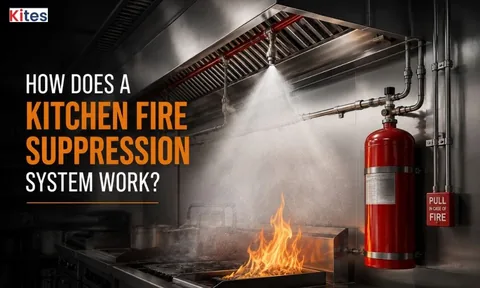
A step-by-step look at how a kitchen fire suppression system detects, activates and suppresses a cooking fire, from ignition to alarm signal.
How a wet chemical fire suppression system actually stops a commercial kitchen fire, the chemistry behind it, and how it compares to sprinklers.
24x7 Emergency Service
System discharged, or due an inspection?
Talk to a kitchen fire suppression specialist in Ad Dammam. We cover commercial kitchens across Kingdom of Saudi Arabia.