What Happens If You Skip Kitchen Fire Suppression Maintenance?
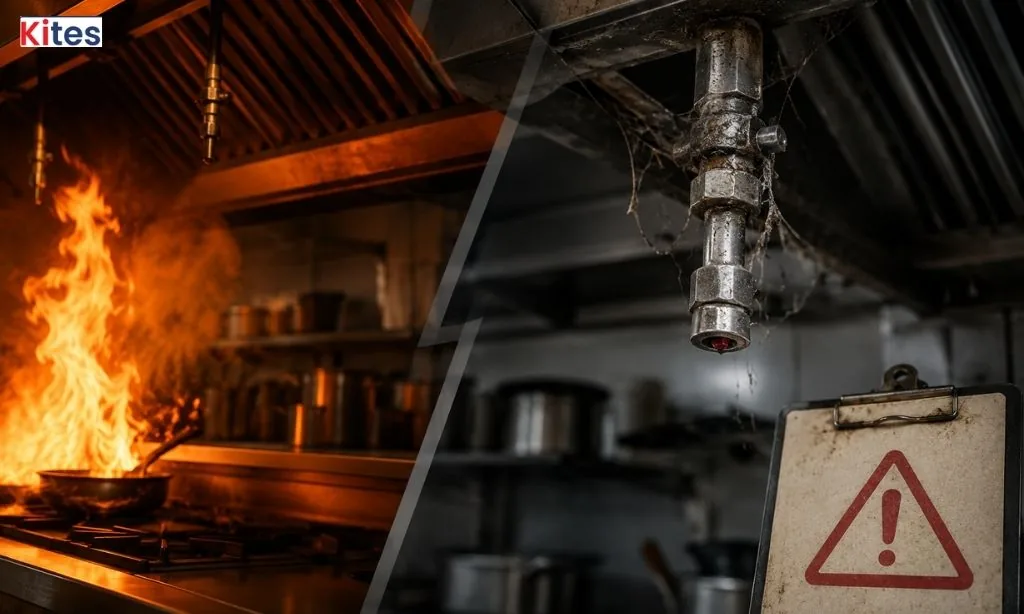
Skipping kitchen fire suppression system maintenance doesn't cause an obvious, visible problem, which is exactly the risk. A system can sit untouched for months or years without ever activating, and during that time a blocked nozzle, a corroded pipe, a damaged detection line or low cylinder pressure can develop unnoticed. The system still looks like it's there and working. Whether it actually would work is only tested the moment a real fire happens, which is the worst possible time to find out.
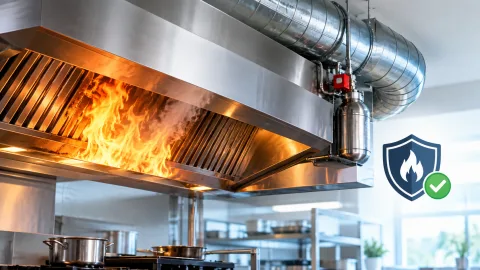
A kitchen fire suppression system spends almost all of its working life doing nothing visible. No alarms, no discharge, no obvious sign it's even switched on, because most kitchens, most of the time, don't have a fire. That's the whole point of the system, but it's also exactly why maintenance gets skipped: nothing appears to be going wrong, so nothing feels urgent. Commercial kitchens run on heat, grease, oil and open flame every operating day, and the system sitting above that cooking line has one job — staying ready for the day it's actually needed, detecting and suppressing a fire the moment it's called on. Delayed maintenance lets damaged, expired, blocked or malfunctioning components go unnoticed for exactly that reason: nobody is checking, and the system doesn't announce its own faults. Regular inspection and maintenance is what catches these problems while they're still fixable, rather than during an actual fire.
Why Is Kitchen Fire Suppression System Maintenance Important?
A fire suppression system is unusual among safety equipment in one specific way: its entire value sits in an event that, for most kitchens, may never happen. That makes it easy to treat as a one-time installation rather than ongoing equipment, unlike something used daily where a fault would be obvious immediately. Maintenance is what closes that gap between "looks fine" and "would actually work." A system that was correctly installed years ago doesn't stay correctly functioning on its own; grease, heat, vibration and time all work against it quietly in the background.
What Happens If You Don't Maintain a Kitchen Fire Suppression System?
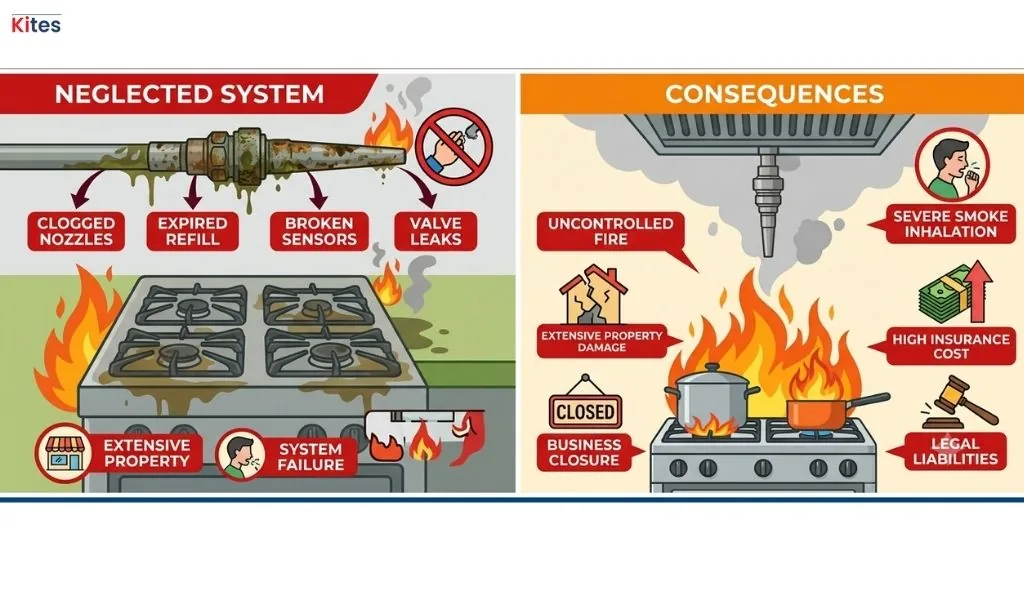
Without a regular kitchen fire suppression system inspection, a system can develop faults that stay completely invisible until they matter:
- Detection components respond slower, or not at all, if coated in grease or damaged
- Nozzles blocked by grease or debris discharge less agent, or in the wrong pattern, than the system was designed for
- Cylinder pressure can drift outside specification without any visible warning sign
- A gas or electrical shut-off mechanism that's never been tested may not fire correctly under real conditions
- Compliance documentation lapses, which can affect Civil Defense approval and insurance standing for the site
None of these show up during normal kitchen operations. They only become apparent during an inspection, or during an actual fire, and only one of those is a safe time to find out.
Can a Kitchen Fire Suppression System Fail If It Is Not Maintained?
Yes. A system doesn't need to be badly installed to fail; it can fail simply from being left alone too long. The most common failure points in an unmaintained system are mechanical and gradual rather than sudden: a nozzle that's slowly accumulated enough grease to change its spray pattern, a detection line that's taken enough heat cycling to respond more slowly than it should, a cylinder that's lost pressure over time, or a manual release station that's been blocked by stored kitchen equipment. None of these represent the system's core components being switched off; they represent the system quietly becoming less effective while still appearing to be in place.
10 Signs Your Kitchen Fire Suppression System Needs Attention
- Visible corrosion or damage on piping, cylinders or nozzles
- Grease build-up visibly coating nozzles or the detection line
- An inspection tag that's expired or missing entirely
- No service record you can point to, or no memory of the last visit
- New or moved kitchen equipment that hasn't been checked against the system's coverage
- An unusual smell near the gas shut-off mechanism
- Visible physical damage to any system component from cleaning, renovation or general wear
- A cylinder pressure gauge reading outside the normal operating zone
- A hydrostatic test date that's overdue, if the cylinder is due for one
- Kitchen staff who don't know where the manual release station is or how to use it
Any one of these on its own is worth a call. Several together usually means the system has gone longer than it should without professional attention.
What Is Checked During Kitchen Fire Suppression System Maintenance?
A maintenance visit works through the system's core components: the suppression cylinder, detection line, discharge nozzles, piping and connections, manual release mechanism, gas shut-off function, and alarm or control interface, checking each against damage, contamination and correct operation. For the full breakdown of what each check actually involves, see our kitchen suppression system maintenance guide.
How Often Should Kitchen Fire Suppression Systems Be Maintained?
There's no single interval that fits every kitchen. A high-volume kitchen running fryers all day accumulates grease and wear faster than a light-use catering kitchen, and the applicable fire code, manufacturer requirements and local fire authority all factor into the correct schedule for a given site. What matters more than memorising an exact number is not letting the interval slide because nothing's gone wrong yet, since that's precisely the period when unnoticed faults tend to accumulate.
What Is the Difference Between Inspection, Testing and Maintenance?
A kitchen fire suppression system service visit typically covers kitchen fire suppression system testing alongside inspection and maintenance in one call-out, but the terms aren't interchangeable when reading a service report or a compliance requirement.
What Could Happen During a Kitchen Fire If Maintenance Was Skipped?
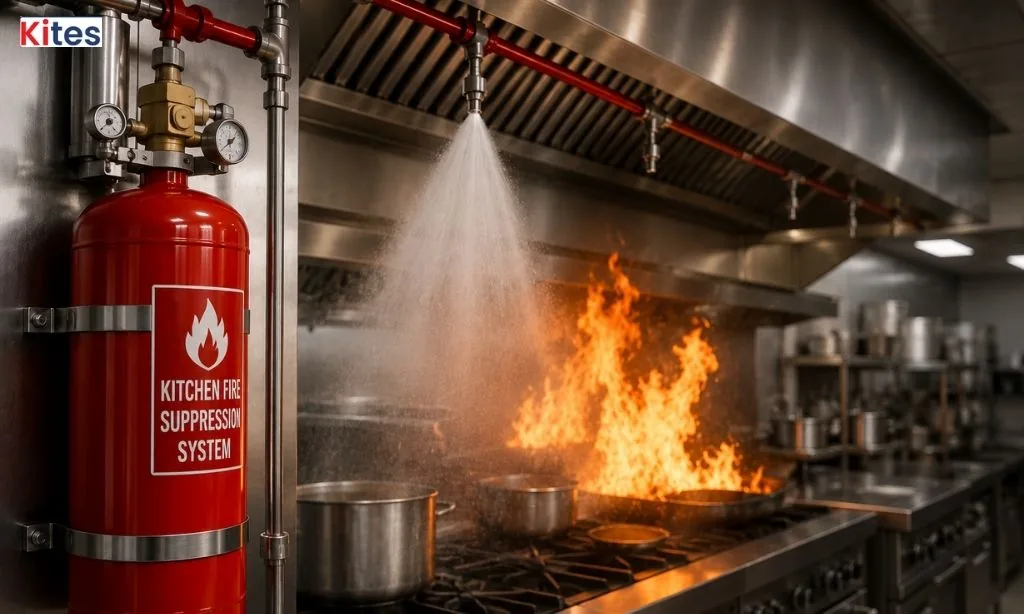
Consider a fryer fire on a system that hasn't been serviced in a long time. If the nearest detection line is coated in grease, it may respond more slowly than it was designed to, giving the fire longer to grow before the system reacts at all. If the nozzle above that fryer is partially blocked, the agent that does discharge may not cover the full hazard, leaving part of the fire unsuppressed. If the gas shut-off hasn't been tested, the fuel source might keep feeding the fire even after the agent discharges. None of these failures are dramatic on their own — a slightly slower response, a partially blocked nozzle — but stacked together they can be the difference between a contained incident and one that spreads into the hood, the duct, or beyond. This isn't a claim that every unmaintained system will fail; it's a description of exactly where the margin disappears when it isn't maintained.
How Do Kitchen Operations Affect Fire Suppression Systems?
A busy kitchen wears on its suppression system faster than a quiet one. Higher cooking volume means more grease reaching nozzles and detection components between services. Equipment changes — a new fryer, a repositioned range — during a refit can leave part of the cooking line outside the system's original coverage without anyone realising. Even routine kitchen cleaning can accidentally affect a nozzle if staff aren't aware it shouldn't be painted over, taped, or repositioned. None of this is anyone's fault exactly; it's simply what happens to fixed equipment inside an environment that's constantly producing heat and grease, which is why the maintenance schedule needs to account for how the kitchen is actually used, not just how it was designed on paper.
Common Kitchen Fire Suppression Maintenance Mistakes
- Skipping a scheduled visit to save cost, then losing track of when the last one happened
- Not reporting new or moved kitchen equipment to whoever maintains the system
- Treating a minor warning sign — a small dent, a faint smell — as not worth mentioning
- Letting untrained kitchen staff attempt to fix or reposition a component themselves
- Not keeping service records on file, which makes both compliance and troubleshooting harder later
- Delaying restoration after a discharge because the fire seemed minor
Can an Existing Kitchen Fire Suppression System Be Inspected and Maintained?
Yes, including a system originally installed by a different contractor. Kites Safety can assess an existing system, bring it up to current inspection and compliance standards, and take over ongoing maintenance from that point. Not knowing the installation history of a system — common when a kitchen changes ownership or management — is not a reason to leave it unchecked; it's a reason to have it assessed sooner rather than later.
Who Needs Kitchen Fire Suppression System Maintenance?
Any commercial kitchen with an installed suppression system needs ongoing maintenance, regardless of how often the kitchen has had a fire incident, how new or old the system is, or how busy the kitchen typically is. A system that's never once activated needs the same attention as one that has; readiness, not history, is what maintenance actually protects.
Why Choose Kites Safety for Kitchen Suppression Maintenance?
A system that's easy to forget about needs a maintenance partner that doesn't forget it either. Kites Safety tracks service schedules for the kitchens on its books, works exclusively on kitchen fire suppression rather than treating it as one line among unrelated services, and issues a written service record after every visit, so the burden of remembering doesn't sit entirely with the kitchen.
How Can You Keep Your Kitchen Fire Suppression System Ready?
- Keep to a scheduled maintenance interval rather than an ad hoc one
- Report any change to kitchen equipment to whoever maintains the system
- Take any of the 10 warning signs above seriously, even if they seem minor
- Keep service records on file and know when the last visit happened
- Make sure kitchen staff know where the manual release station is and what it does
Don't Wait Until Your Kitchen Suppression System Is Needed
A kitchen fire suppression system that's never been called on can still be doing its job correctly, or quietly failing to. The only way to know which is regular, professional maintenance — not assuming that a system left alone is a system still working.
FAQ
What happens if a kitchen fire suppression system is not maintained?
Without regular maintenance, grease-blocked nozzles, damaged detection lines, low cylinder pressure, or faulty gas shut-off mechanisms can prevent the system from working effectively during a fire.
How often should a kitchen fire suppression system be inspected and maintained?
The maintenance schedule depends on the manufacturer's requirements, applicable fire codes, local fire authority guidelines, and kitchen usage. High-volume commercial kitchens may require more frequent attention due to grease buildup and wear.
Can a kitchen fire suppression system fail even if it looks fine?
Yes. A system may appear intact while hidden issues, such as blocked nozzles, corroded pipes, or reduced cylinder pressure, affect its performance. Professional inspection helps identify these problems before a fire occurs.
What components are checked during kitchen fire suppression system maintenance?
A maintenance visit typically checks the suppression cylinder, detection line, discharge nozzles, piping, connections, manual release mechanism, gas shut-off function, and alarm or control interface.
Can Kites Safety maintain a kitchen fire suppression system installed by another contractor? Yes. Kites Safety can inspect existing kitchen fire suppression systems, assess their condition, identify maintenance needs, and provide ongoing maintenance support, even when another contractor handled the original installation.
Need help with kitchen fire suppression? Contact Kites
0 Comments
Leave a comment
More from the blog