
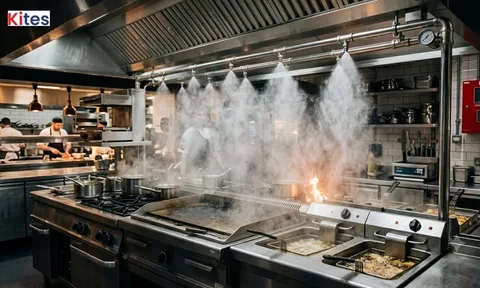
How Wet Chemical Fire Protection Works in Commercial Kitchens
How a wet chemical fire suppression system actually stops a commercial kitchen fire, the chemistry behind it, and how it compares to sprinklers.
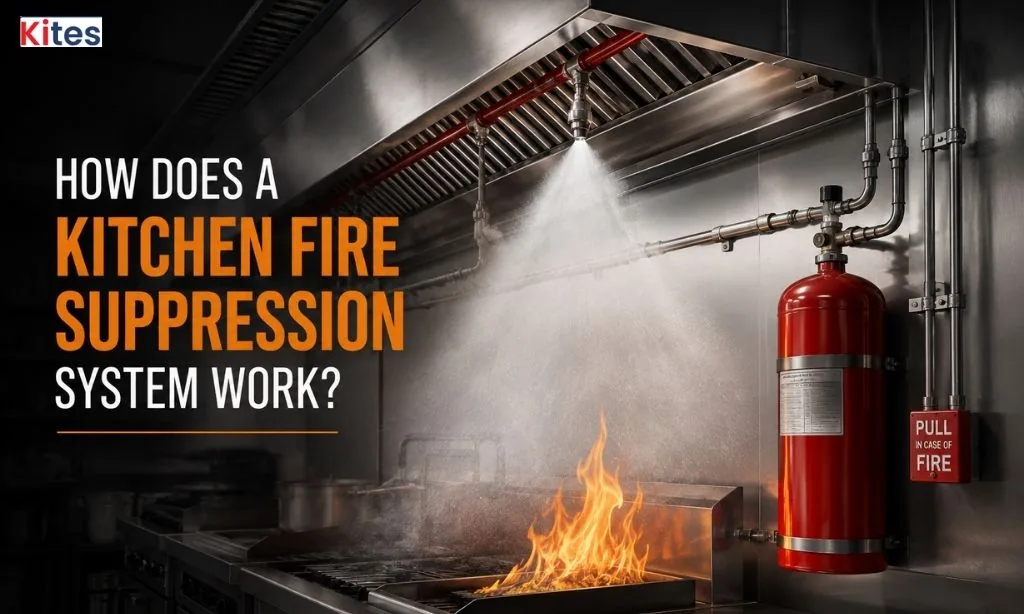
A kitchen fire suppression system works in a fixed sequence: it detects rising heat above the cooking line, triggers automatically, releases a wet chemical agent onto the fire and the surrounding hood and duct, cuts fuel or power to the equipment, and signals an alarm, all within seconds of a fire starting. The goal is to control a grease or cooking-oil fire before it spreads beyond the appliance where it began.
Commercial kitchens run hot, oil-filled and open-flame equipment for hours at a stretch, conditions that turn a small flare-up into a serious fire faster than most people expect. Grease and cooking-oil fires in particular spread quickly once they catch, and water, the instinctive response to most fires, can make an oil fire worse rather than putting it out. That gap is exactly what a dedicated commercial kitchen fire suppression system is built to close: a fixed installation designed specifically to detect and suppress fires around cooking equipment, rather than a general-purpose fire safety measure adapted for the job. This article walks through what actually happens between a fire starting and a kitchen being safe again — detection, activation, agent release and fuel shutdown — step by step. Kites Safety designs and installs kitchen fire suppression systems for commercial kitchens across Saudi Arabia, and the mechanism described here is the same one behind every system the company installs.
A kitchen fire suppression system is a fixed, automatic installation positioned above and around commercial cooking equipment that detects heat from a fire and discharges an extinguishing agent directly onto it, while cutting fuel or power to the equipment at the same moment. It's engineered specifically for the cooking line, covering the appliance, the exhaust hood and the duct above it as one connected hazard rather than protecting any single point in isolation. For a fuller breakdown of what these systems are built from, see our guide to kitchen fire suppression systems.
A commercial cooking line combines everything a fire needs: sustained high heat, oil, and open flame, often running for most of a working day. Once a grease fire catches, it can travel from the appliance into the hood and duct within seconds, and a fire that reaches the duct is a very different problem from one contained at the fryer. General building fire protection, sprinklers in particular, isn't designed for this hazard and can spread burning oil rather than extinguishing it. A dedicated system positioned directly above the cooking equipment reacts faster and uses an agent suited to oil and grease fires specifically, which is the entire reason this category of fire protection exists separately from standard building fire safety.
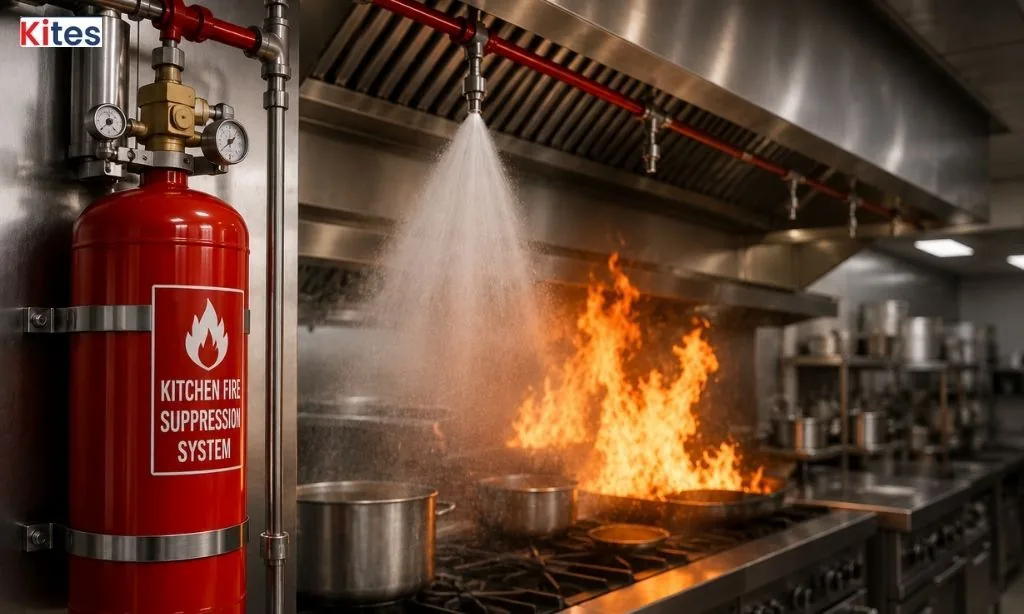
Seven stages take a kitchen from a fire starting to the situation being fully controlled:
Most kitchen fires begin at a specific point: hot oil in a fryer, a flare-up on a griddle, or grease igniting near an open flame. At this stage, the fire is usually still small and localised to the appliance.
Heat-sensitive detectors positioned directly above the cooking equipment sense the rising temperature. These detectors are rated for the higher ambient heat a working kitchen already produces, so they respond to a genuine fire rather than normal cooking warmth.
Once heat crosses the system's rated threshold, activation happens automatically, without anyone needing to notice the fire or reach a manual release station first. This is the point where the system takes over from human reaction time.
A wet chemical fire suppression system discharges its agent through nozzles positioned over the appliance, the hood and the duct above it. Wet chemical is the current standard for kitchen fire suppression, replacing the dry chemical powders used in older systems, because it both smothers and cools the fire rather than just cutting off oxygen.
The wet chemical agent reacts with the hot cooking oil through a process called saponification, forming a soap-like layer across the surface. This layer smothers the flame and, critically, cools the oil below its auto-ignition point, which is what stops the fire from reigniting once the agent settles.
At the same moment the agent discharges, a shut-off mechanism cuts gas or electrical supply to the protected equipment. Removing the fuel source at the exact point of suppression is what prevents the fire from simply reigniting off a burner that's still running.
A signal is sent to the kitchen's alarm or monitoring system, alerting staff and, where the system is integrated with the building's wider fire alarm, anyone monitoring it beyond the kitchen itself. This is what turns a contained kitchen incident into something the rest of the building is aware of, rather than something only the kitchen team notices.
A discharge is not the end of the process. The affected area should be shut down immediately and not returned to normal cooking operations, even if the fire looked minor. The system needs professional restoration before it can protect the kitchen again: this typically means recharging or replacing the discharged cylinder, checking nozzles and detection components for damage or contamination, and verifying the whole system functions correctly before signing it back into service. Cooking on equipment under a system that hasn't been restored leaves the kitchen without protection if something goes wrong a second time.
Request Kitchen Suppression System Restoration
Every system is built from the same core parts working together: a pressurised agent cylinder, a heat detection line, discharge nozzles positioned over each hazard, a piping network connecting them, a manual pull station, a control panel, a gas or electrical shut-off mechanism, and an alarm interface. See the full component breakdown for what each part does individually.
Coverage typically extends across four hazard groups: cooking appliances such as fryers, griddles and ranges; open-flame equipment like charbroilers and rotisseries; the exhaust hood itself; and the ducts and plenums carrying hot, grease-laden air away from the kitchen. Leaving any of these out of the design, the duct especially, is a common gap in poorly specified systems. See the full list of equipment Kites Safety designs around.
A nozzle's job is to deliver agent to a specific point — an appliance surface, a duct opening, a filter bank — not to spray generally in the direction of the cooking line. Positioning is calculated against each appliance's exact dimensions and the spray pattern the manufacturer specifies for that nozzle type, since a nozzle aimed even slightly off, or positioned too far from the hazard it's meant to cover, can leave a gap in coverage that isn't obvious until the system is actually tested against a real fire. This is also why nozzle placement isn't something to eyeball on site; it follows the calculations made during the design phase, based on the site survey.
Yes, and this is one of the more overlooked risks in an operating kitchen. A system is designed around the specific appliances present at installation, their exact position, size and heat output. Swap a two-burner range for a larger one, add a new fryer, or move equipment during a kitchen refit, and the existing nozzle coverage may no longer match what's actually on the line. A new or repositioned appliance sitting outside its intended nozzle's coverage is effectively unprotected, even though the system as a whole is still functioning. Any significant change to kitchen equipment is worth flagging to whoever maintains the system, so coverage can be reassessed rather than assumed.
No. A fire suppression system is a fixed, automatic installation that activates on its own the moment it detects heat, without anyone needing to notice the fire or act first. A portable fire extinguisher, including a Class K unit rated for cooking oil fires, requires a person to notice the fire, reach the extinguisher and operate it correctly under pressure. The two aren't substitutes for each other: a fixed suppression system covers the cooking line automatically, while portable extinguishers remain a standard requirement alongside it for fires the fixed system doesn't reach or for use by trained staff in the moments before or after activation.
A system that passed its initial installation check can still develop faults invisibly over time: a nozzle gradually blocked by grease, a detection line that's taken repeated heat exposure, cylinder pressure drifting outside spec. None of this is obvious from looking at the kitchen. Regular inspection catches these issues on a schedule, rather than the system's condition only being discovered when it's actually called on to work. For the detail on what an inspection actually checks, see our kitchen suppression system maintenance guide.
Maintenance is what keeps the seven-step sequence described earlier actually working when it matters. A detection line coated in grease responds slower. A partially blocked nozzle changes the spray pattern the system was designed around. A shut-off mechanism that's never been tested may not fire correctly under real conditions. Scheduled maintenance is what turns a system that was correctly installed into one that's still reliable months or years later.
A few situations reliably trigger the need for a new or reassessed system: opening a new commercial kitchen, since suppression coverage is a standard condition of operating one in Saudi Arabia; expanding a menu to add frying or open-flame cooking where none existed before; renovating or upgrading the exhaust hood and duct, which changes the airflow and hazard the system was originally designed around; and after any fire incident, discharge or near-miss, which is a clear signal that the current setup needs a professional review rather than a quick fix.
Understanding how a kitchen fire suppression system actually works — detection, activation, agent chemistry, fuel shutdown — is exactly the kind of detail that separates a specialist from a general fire-equipment supplier. Kites works on kitchen fire suppression exclusively, with a technical team trained on the mechanism described in this article, not a generic fire-safety product line, and 10+ years designing, installing and maintaining these systems for commercial kitchens across Saudi Arabia. See why clients choose Kites and our full client list.
A kitchen fire suppression system doesn't eliminate fire risk on a cooking line, but a correctly designed, installed and maintained one gives a kitchen a real chance of stopping a small fire before it becomes a much bigger problem. Knowing how the system works, and what keeps it working, is the first step to making sure it's actually ready when needed. As a fire suppression system contractor, Kites handles the full lifecycle from design through to ongoing maintenance.
Need help with kitchen fire suppression? Contact Kites
More from the blog
How a wet chemical fire suppression system actually stops a commercial kitchen fire, the chemistry behind it, and how it compares to sprinklers.
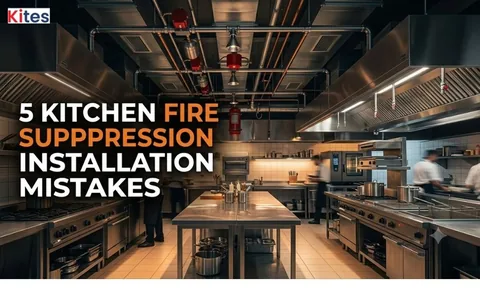
Five common kitchen fire suppression system installation mistakes, what they lead to, and how to avoid them before your system is put to the test.
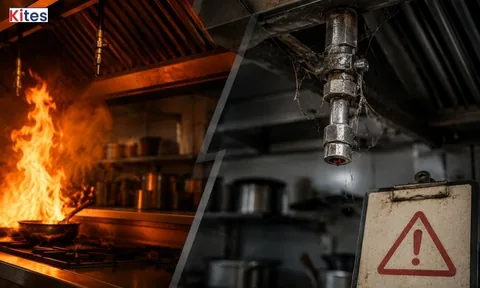
Skipping kitchen fire suppression system maintenance leaves faults invisible until the system is needed. Here's what can go wrong, and how to avoid it.
24x7 Emergency Service
System discharged, or due an inspection?
Talk to a kitchen fire suppression specialist in Ad Dammam. We cover commercial kitchens across Kingdom of Saudi Arabia.