How Wet Chemical Fire Protection Works in Commercial Kitchens
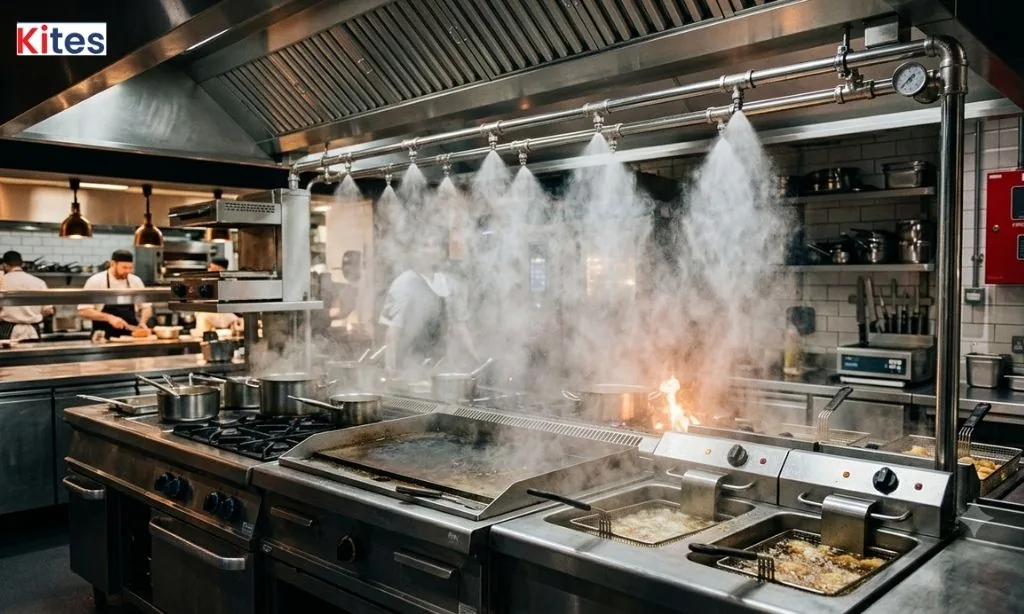
Wet chemical fire protection works by discharging an alkaline liquid agent onto burning cooking oil, which reacts with the hot fat through saponification, forming a soap-like foam layer that smothers the flame and cools the oil below its auto-ignition temperature. That cooling step is what separates wet chemical from older methods: it stops the fire from reigniting once the agent settles, which is exactly where dry chemical powder and water both fall short on a grease fire.
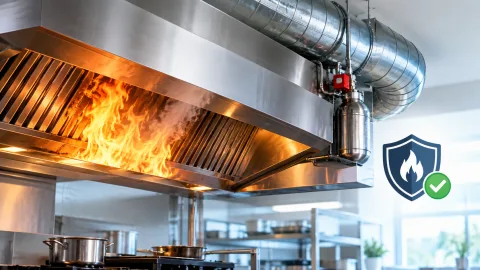
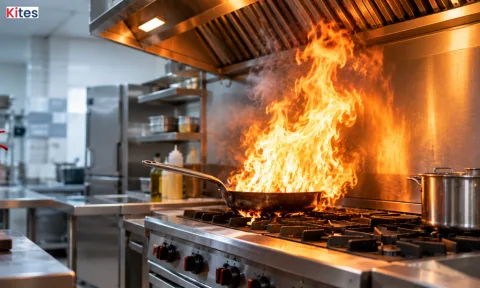
A commercial kitchen fire isn't the same problem as a fire anywhere else in a building. Deep fryers hold oil well above 300°C, grills and ranges run open flame for hours at a stretch, and every one of those appliances sits directly under an exhaust hood pulling hot, grease-laden air through a duct that can carry a fire well beyond the appliance where it started. Ordinary fire protection wasn't built for this specific combination of high heat, fuel-soaked surfaces and a ventilation system actively feeding a fire oxygen. Water makes a hot-oil fire worse rather than better, and general building fire protection isn't positioned or formulated for a grease fire at all. Wet chemical fire suppression exists specifically to close that gap: a purpose-designed system built around the chemistry of extinguishing burning oil, not adapted from a general-purpose fire protection product. This article walks through how that chemistry actually works, what the system is built from, and how it compares to the alternatives.
Contact Kites Safety for kitchen fire protection
What Is a Wet Chemical Fire Suppression System?
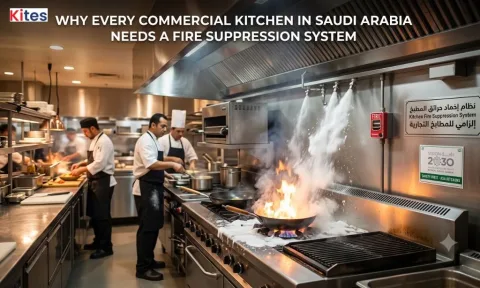
A wet chemical fire suppression system, also referred to as a commercial kitchen fire suppression system or kitchen fire suppression system, is a fixed, automatic installation that detects heat above a cooking line and discharges a liquid extinguishing agent directly onto the fire, the appliance and the surrounding hood and duct. It's the current standard for commercial kitchen fire protection, replacing the dry chemical powder systems used before the mid-1990s, because the liquid agent both smothers a grease fire and cools it, rather than only cutting off its oxygen supply.
Why Are Commercial Kitchen Fires So Difficult to Extinguish?
Cooking oil has a high auto-ignition temperature, meaning it needs to reach a real high heat before it catches, but once it does, it's already burning well above the temperature most general extinguishing agents are designed to handle. A grease fire that looks extinguished can reignite within seconds if the oil is still hot enough, which is exactly what happens when an agent smothers the flame without actually cooling the fuel. The fire also isn't contained to one spot: heat and flame travel upward into the exhaust hood, and grease that's built up in the duct over time gives a fire a path to spread well beyond the appliance where it started. This combination — high heat, ready reignition, and a built-in escape route through the hood and duct — is what makes cooking-oil fires meaningfully harder to put out for good than most other fire types.
How Does Wet Chemical Fire Protection Work?
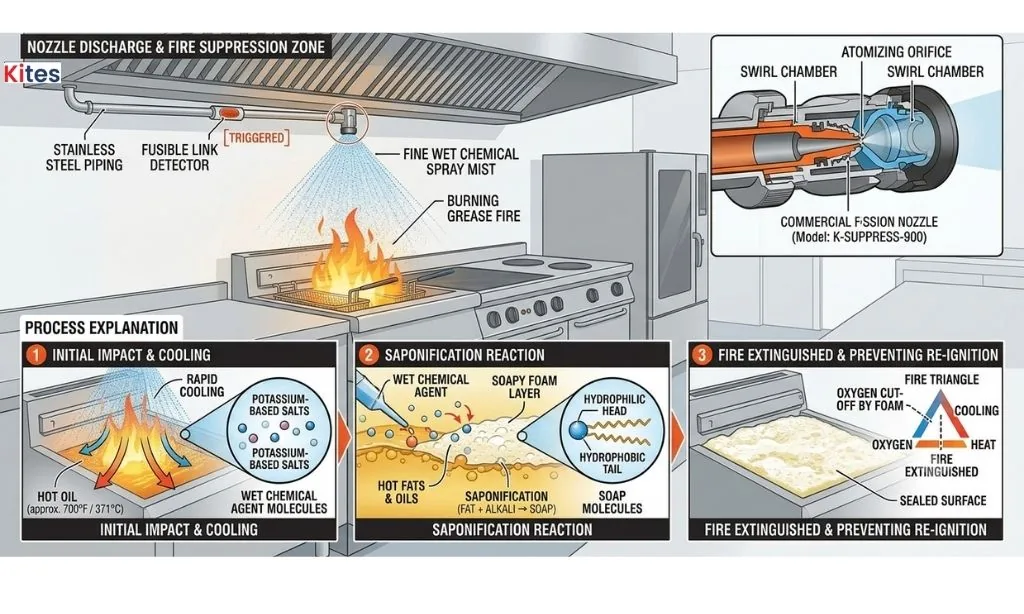
The extinguishing agent itself is an alkaline solution, typically based on potassium salts. When it contacts hot cooking oil, it triggers a chemical reaction called saponification — the same basic reaction that turns fat into soap — which happens almost instantly at cooking-oil temperatures. That reaction produces a thick, soapy foam layer across the surface of the oil. This layer does two things at once: it forms a vapour-sealing blanket that cuts the fire off from oxygen, and it draws heat out of the oil, cooling it below the point where it would reignite on its own. Cutting oxygen alone, which is roughly how older dry chemical agents worked, can extinguish the visible flame without solving the underlying problem: oil that's still hot enough to reignite the moment fresh air reaches it again. The cooling effect is the part that actually makes the fire stay out.
What Are the Main Components of a Wet Chemical Fire Suppression System?
Every system is built from the same core parts: a pressurised cylinder holding the wet chemical agent, a heat-sensitive detection line positioned above the cooking equipment, discharge nozzles aimed at each specific hazard, a piping network connecting the cylinder to the nozzles, a manual pull station, a control panel, a gas or electrical shut-off mechanism, and an alarm interface. See our breakdown of these components for how each part functions individually.
What Parts of a Commercial Kitchen Does Wet Chemical Protection Cover?
A kitchen hood fire suppression system's coverage extends across the cooking appliances themselves — fryers, griddles, ranges, woks; open-flame equipment like charbroilers and rotisseries; the exhaust hood positioned above the line; and the ducts and plenums that carry hot, grease-laden air out of the kitchen. Treating the appliance, hood and duct as one connected hazard, rather than protecting the cooktop alone, is what closes the gap a fire would otherwise use to spread upward and outward.
Wet Chemical Fire Suppression vs Traditional Fire Protection
Older dry chemical systems extinguish a flame by smothering it — cutting off the oxygen a fire needs — without doing much to cool the fuel itself. That worked reasonably well against the lower-temperature animal fats common in older cooking equipment, but it struggles against the hotter, more efficient vegetable-oil frying and high-output equipment used in most modern commercial kitchens. Reignition risk is the core difference: a dry chemical agent can put a visible flame out and still leave oil hot enough to catch again within moments, while wet chemical's cooling effect is specifically what prevents that. This is the main reason wet chemical replaced dry chemical as the standard for commercial cooking equipment.
Wet Chemical Fire Suppression vs Fire Sprinkler Systems
| Wet Chemical Suppression | Fire Sprinklers | |
|---|---|---|
| Agent | Alkaline liquid formulated for cooking oil fires | Water |
| Effect on burning oil | Smothers and cools via saponification | Can cause oil to splatter and spread, or trigger a steam reaction |
| Coverage | Targeted at the cooking line, hood and duct specifically | General area coverage, not calibrated to a specific fuel |
| Purpose | Purpose-built for cooking-oil and grease fires | Designed for general structure fire protection |
Water and burning oil don't mix safely. Water is denser than hot oil and sinks below it, then flashes to steam almost instantly, which can violently throw burning oil outward rather than putting it out. A standard sprinkler system is built to protect a building broadly, not to handle the specific chemistry of a fryer fire, which is exactly why kitchens need dedicated wet chemical protection over the cooking line in addition to, not instead of, whatever general fire protection the rest of the building has.
What Is UL 300 and Why Does It Matter for Commercial Kitchens?
UL 300 is a US testing standard, updated in the mid-1990s, that set stricter fire-suppression performance requirements specifically for commercial cooking equipment, in response to kitchens shifting toward hotter-burning vegetable oils and more efficient, higher-heat-output appliances. Dry chemical systems that had previously passed fire-suppression testing largely couldn't meet the new UL 300 requirements, which effectively established wet chemical as the standard technology for compliant commercial kitchen systems going forward. While UL 300 itself is a US listing standard, it's referenced internationally as the benchmark modern wet chemical systems are designed and tested against, including by manufacturers and engineers working on projects across the Gulf.
NFPA 17A and NFPA 96: What Restaurant Owners Should Know
Two internationally referenced standards sit behind most wet chemical system design and installation. NFPA 17A covers the design, installation, maintenance and testing of wet chemical extinguishing systems specifically — sizing, nozzle placement, discharge patterns and service intervals. NFPA 96 is broader, covering ventilation control and fire protection for commercial cooking operations as a whole, including hood, duct and filter requirements that a suppression system has to work alongside rather than in isolation. Restaurant owners don't need to become experts in either standard, but it's worth knowing they exist: a contractor referencing NFPA 17A and NFPA 96 in a system design is working to an internationally recognised technical benchmark, not an arbitrary in-house approach. In Saudi Arabia specifically, SASO's Machinery Safety technical regulations for lifting and safety equipment and Saudi Civil Defense requirements remain the applicable legal framework a system also has to satisfy.
Where Are Wet Chemical Fire Suppression Systems Used?
Cooking equipment fire suppression using wet chemical technology applies wherever commercial cooking happens:
- Restaurants and cafes, from single-fryer counters to full-service kitchens
- Hotel and hospitality kitchens
- Hospital and healthcare facility kitchens
- School and corporate cafeterias
- Cloud kitchens and catering facilities
- Any commercial cooking operation using fryers, griddles, ranges or open-flame equipment
See the industries Kites Safety serves for more detail.
Common Mistakes Commercial Kitchen Owners Should Avoid
- Assuming a portable Class K extinguisher is a substitute for a fixed suppression system rather than a complement to it
- Installing a generic, undersized system instead of one designed around the kitchen's actual equipment and hood configuration
- Adding or moving cooking equipment without checking it against the existing system's nozzle coverage
- Treating installation as a one-time job and skipping scheduled inspection and maintenance afterward
- Not confirming the installed system actually meets the UL 300 and NFPA 17A benchmarks discussed above
- Resuming cooking on a system that discharged without professional restoration first
How to Choose a Commercial Kitchen Fire Suppression Company
Look for a contractor that specialises in kitchen fire suppression specifically, not one offering it as a minor line item alongside unrelated fire or security services. Ask whether their systems are designed to UL 300 and NFPA 17A benchmarks, what their site survey process looks like before they specify a system, and whether they handle the full lifecycle — design, installation, testing, inspection and ongoing maintenance — or only the initial installation.
Protect Your Commercial Kitchen With Professional Wet Chemical Fire Protection
Understanding the chemistry behind wet chemical fire suppression — why cooling matters as much as smothering, why water and hot oil don't mix, why UL 300 changed what "compliant" means for a kitchen — is useful background for any commercial kitchen owner, but it doesn't replace a proper site assessment. The right system for a specific kitchen depends on its equipment, hood configuration and layout, not a generic package.
Need help with kitchen fire suppression? Contact Kites
0 Comments
Leave a comment
More from the blog