Fire Safety Planning for Hotel Kitchens: Key Risks Facility Managers Should Consider
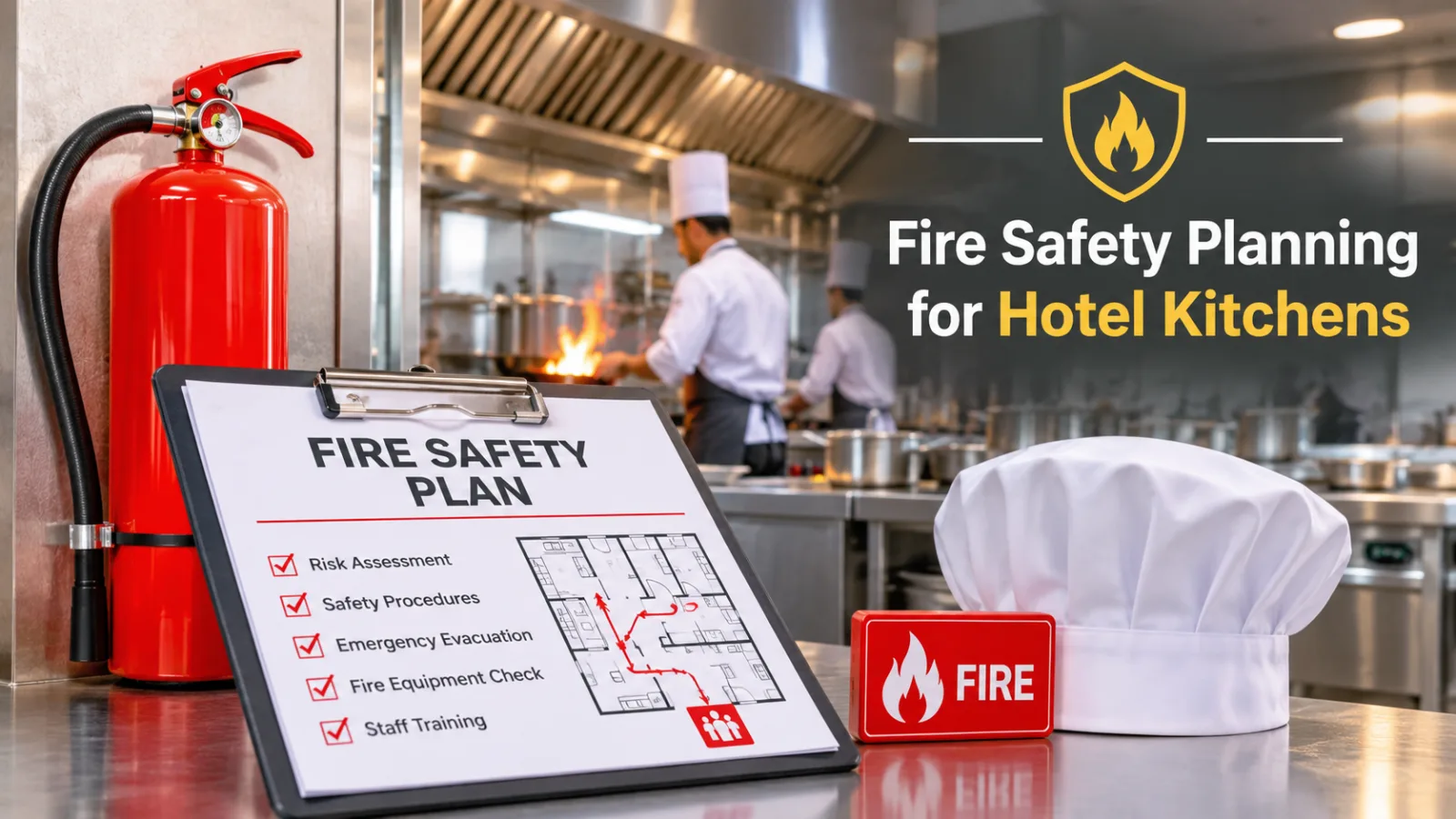
Hotel kitchen fire safety rests on four things: a clear plan for staff, an automatic fire suppression system over the cooking line, regular cleaning of hoods and ducts, and scheduled inspection and maintenance. Facility managers should start by finding where grease, heat, gas and power meet, then close each gap with a rule, a device or a routine.
A hotel kitchen hardly ever switches off. Breakfast runs into room service, room service runs into banquets, and the night shift is already prepping for the morning. That is a lot of hours for fryers, hot oil, gas burners and exhaust fans to run side by side.
The main hotel kitchen fire risks come from fryers, cooking oils, gas appliances, grease buildup and extraction systems. A fire can hurt guests and staff, stop food service, damage the building and shake guest trust. The good news is that most kitchen fires can be prevented. It takes staff procedures, the right fire protection equipment, regular inspections and steady maintenance.
Kites Safety is a kitchen fire safety company based in Ad Dammam. It designs, installs, tests, inspects, refills and maintains commercial kitchen fire suppression systems across Saudi Arabia. This guide shows what facility managers should look at first.
Worried About Your Kitchen? Request a Site Survey
Why Is Fire Safety Especially Important in Hotel Kitchens?
A hotel kitchen is not the same as a street restaurant. The kitchen often sits inside the main building, with guest rooms above or beside it. Ducts and shafts can carry smoke and fire a long way. One building may also hold several kitchens at once: the main kitchen, a buffet, a banquet hall, a staff canteen and a coffee shop. Then there is the pace. Hotels cook in large batches, run late events and take on extra staff in busy seasons. New team members may not know where the gas valve is or how to use the manual pull station. The cost of a fire goes beyond the kitchen. Guests may need to leave. Outlets may close. Insurance claims, repairs and lost bookings can follow. For a deeper look at why every commercial kitchen in the Kingdom needs protection, read why commercial kitchens in Saudi Arabia need fire suppression.
What Are the Most Common Fire Risks in Hotel Kitchens?
Most restaurant kitchen fire hazards are the same in a hotel, only bigger and busier. These are the ones to look at first: • Fryers and cooking oil. Oil can ignite fast and burns hot. A fryer left on, or a thermostat that fails, is a common cause. • Gas appliances. Ranges, grills and ovens use open flame next to oil, cloth and packaging. A small leak at a joint can turn a spark into a fire. • Grease buildup. Grease settles on hoods, filters and walls. Over time it becomes fuel that helps a fire spread. • Extraction systems. Grease vapour cools inside the hood and duct and sticks to the metal. A fire can then travel through the duct, out of sight. Our guide to kitchen hood and duct fires explains how this happens. • Electrical equipment. Heavy loads, damaged plugs and extension leads cause heat and sparks. • Storage and habits. Boxes stacked near burners, blocked exits and rushed shifts all raise the risk. To see which cooking appliances a system can cover, visit our page on equipment we protect.
How Can Hotels Develop an Effective Kitchen Fire Prevention Plan?
Good hotel kitchen fire prevention starts with a written plan that every shift can follow. Keep it short and simple. Here is a way to build one:
- Walk the kitchen and list the hazards. Note every fryer, gas line, hood, duct and electrical panel. A professional site survey and risk assessment helps you spot what you may miss.
- Write clear procedures. Cover opening and closing checks, oil handling, gas shut-off and what to do in a fire.
- Train every person. That includes seasonal and agency staff. Run short drills so people know where the pull station, gas valve and exits are.
- Set a cleaning schedule. Filters, hoods and ducts need cleaning on a fixed routine, and someone must sign it off.
- Keep space clear. Store stock away from flames and keep exits open.
- Name an owner. One person should hold the records, book the inspections and follow up on faults.
- Review after any change. A new menu, a new fryer or a kitchen move can change the risk. This kind of hotel fire safety planning only works when it is written down, practised and checked.
What Fire Protection Systems Should Hotel Kitchens Consider?
A hotel kitchen needs layers of protection. No single device does the whole job.
| Protection | What it does |
|---|---|
| Automatic wet chemical suppression | Detects fire and sprays agent onto the appliances, hood and duct |
| Gas and electrical shut-off | Cuts the fuel and power when the system operates |
| Manual pull station | Lets staff start the system by hand, near an exit |
| Detection and alarm link | Sends a signal to the hotel fire alarm panel |
| Cooking-oil extinguishers | Backup for small fires, not a replacement for the system |
A hotel kitchen fire suppression system is the core of this setup. It works on its own, even if no one sees the flames. If you want to see how the parts fit together, read how a kitchen fire suppression system works and how wet chemical protection works. You can also look at the automatic kitchen hood suppression system page. Poor installation can weaken even a good system, so check the common installation mistakes before you sign off on a new job. For general rules that civil defense reviewers look at, see fire safety requirements for restaurants.
Why Is Regular Fire Suppression Inspection and Maintenance Essential?
A suppression system that nobody checks may fail on the one day you need it. Nozzles can clog with grease. Fusible links and detection lines wear out. Cylinders can lose pressure. None of this shows from the outside. A proper inspection checks the detection line, nozzles, cylinders, shut-off links and the system as a whole. Preventive maintenance keeps parts fresh before they fail. After any discharge, the system also needs refilling and recharge so it is ready again. How often should this happen? The interval depends on the fire code, the system maker and your local civil defense office. Many codes ask for a professional check at least twice a year, but always confirm the rule for your own site. A yearly plan such as an annual maintenance contract keeps the schedule from slipping. To see what can go wrong when this is ignored, read what happens if you skip suppression maintenance, or visit our kitchen suppression system maintenance page. Book an Inspection: Call +966 592 066 358
Hotel Kitchen Fire Safety Checklist for Facility Managers
Use this kitchen fire safety checklist to spot gaps. Print it, share it with kitchen managers and keep a dated record.
Every day • Switch off fryers and gas burners at closing. • Wipe grease from surfaces, hoods and filters that staff can reach. • Keep exits, aisles and the area near the pull station clear. • Store boxes and cloths away from flames.
Every week • Check that hood filters are in place and not clogged. • Look at gas hoses, joints and valves for damage. • Check that extinguishers are in place, tagged and not blocked. • Make sure cords and plugs are not worn.
Every month and beyond • Confirm the grease cleaning of hoods and ducts is on schedule. • Run a short fire drill with each shift. • Check the system tag for the last service date. • Test the gas shut-off so staff know it works. • Book the professional inspection before it falls due.
After any event • If the system discharges, stop cooking, make the area safe and call for restoration. • Review what happened and update your plan.
How Can Hotels Reduce Kitchen Downtime During Fire Safety Maintenance?
No kitchen manager wants to close a line during service. Good planning keeps the pause short. • Pick quiet hours. Schedule work between meal periods or overnight. • Work one outlet at a time. Keep the buffet running while the coffee shop is serviced. • Book early. Share the banquet calendar so visits avoid big events. • Ask for a written work plan. It should say what will be checked and how long it will take. • Use a fixed schedule. Planned visits are shorter than emergency repairs. • Keep parts and records ready. Quick access to past reports speeds up each visit. A service partner that knows hospitality will plan around your service, not the other way round.
Why Should Hotels Work With a Professional Kitchen Fire Safety Provider?
A fire suppression system is not a plug-in product. It must match your appliances, your hood size and your layout. A mistake in design or fitting may not show until a fire. A good provider should: • Start with a site survey and hazard check. • Install the system with trained staff and quality parts. • Test and commission it, give you the paperwork and train your team. • Offer inspection, refilling and maintenance after handover. • Answer fast when something goes wrong.
Kites works exclusively on fire suppression and fire safety. As a fire suppression system contractor, it handles all of this under one contract, from supply and installation and testing and commissioning to 24x7 emergency support. The team has over 10 years of experience and has worked on projects in hotels, resorts and other hospitality sites. It is based in Ad Dammam and covers Khobar, Dhahran, Jubail, Riyadh, Jeddah and kitchens across the Kingdom. Local pages are available for Dammam and Riyadh.
Protect Your Hotel Kitchen With a Proactive Fire Safety Plan
Waiting for an incident is the costly way to learn. A short survey now can show which hazards you have, which protection is missing and which checks are overdue. Then you can fix the gaps in order of risk, without rushing. If your hotel kitchen needs a new system, a service check or a clear maintenance plan, the Kites team is ready to help. Protect Your Kitchen Today: Get a Quote | Call +966 592 066 358 | enquiry@kitessafety.com
Frequently Asked Questions
What are the biggest fire hazards in hotel kitchens?
The biggest hazards are deep fat fryers and hot cooking oil, gas appliances, grease buildup in hoods and ducts, and faulty electrical equipment. Poor habits add to the danger, such as blocked exits, stock stored near flames and skipped cleaning. Together, these make the kitchen one of the highest fire risk areas in a hotel.
Do hotel kitchens need dedicated fire suppression systems?
Yes, in most cases. Kitchens with grease-producing cooking equipment are generally expected to have an automatic system as part of civil defense approval. An extinguisher alone is not enough, because it needs a person to act in time. Confirm the exact rule for your site with your local civil defense office.
How often should a hotel kitchen fire suppression system be inspected?
The interval is set by the fire code, the system maker and your local authority. Many codes call for a professional check at least twice a year. Kites confirms the right cycle for your site at the first inspection and can manage it under an annual maintenance contract.
Can hotels continue cooking if a fire suppression system is not working?
Not safely. If the system is faulty, the cooking line has no automatic protection. Stop cooking on the affected line, or agree on approved temporary measures with your civil defense office, and call a specialist at once. Cooking should only restart after the system is repaired and checked.
What should hotel staff do if a cooking-oil fire starts?
Stay calm and never use water on burning oil. Turn off the fuel or power if it is safe to do so. Use the manual pull station or the right extinguisher. If the fire is not out in seconds, leave, close the door behind you, raise the alarm and call civil defense on 998. Afterwards, do not restart cooking until the system has been restored.
Need help with kitchen fire suppression? Contact Kites
0 Comments
Leave a comment
More from the blog